

Installing casters with a stem is a practical upgrade for furniture, carts, and equipment that need smooth mobility without complex mounting plates. Whether you are working with threaded stems, grip ring designs, or expanding stems, proper installation ensures stability, safety, and long-term performance.
This guide walks you through how to install casters with stem step by step, explains the differences between common stem types, and highlights best practices to avoid damage to furniture legs, frames, or equipment bases.
What Are Casters with a Stem?
Casters with a stem use a vertical mounting shaft that inserts directly into a pre-drilled hole or threaded socket. This mounting method is widely used in:
- Office chairs and furniture
- Utility carts and trolleys
- Medical and laboratory equipment
- Light to heavy industrial applications
Compared to plate-mounted wheels, stem-mounted designs are faster to install and provide a cleaner appearance, especially for furniture and compact equipment.
Common Types of Stem Casters
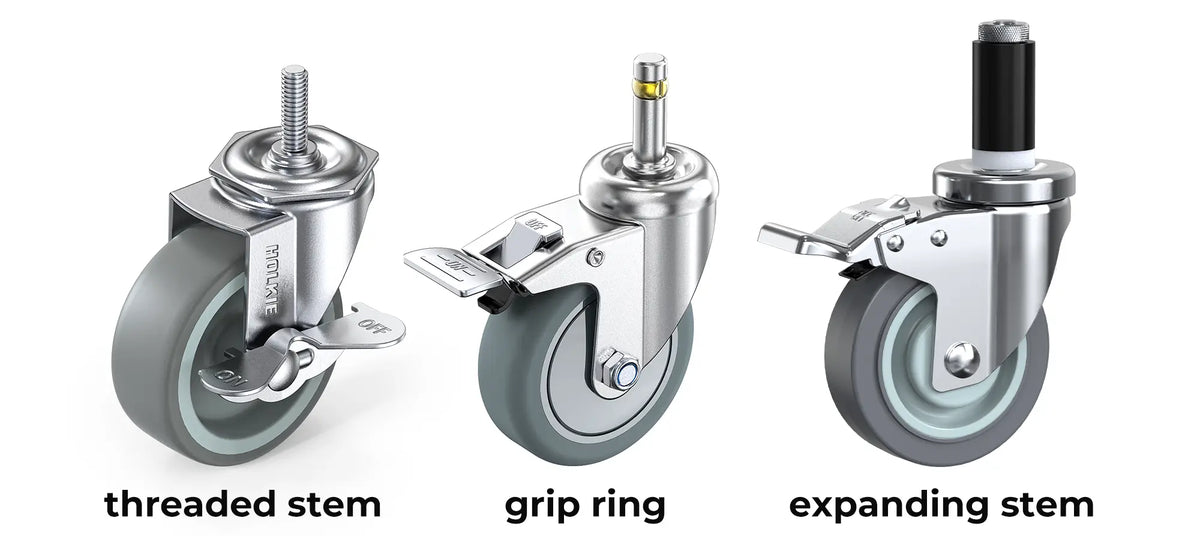
Before installation, it’s important to identify the stem type you are working with. Each requires a slightly different installation approach.
Threaded Stem Casters
Threaded stem casters use a bolt-style stem that screws into a threaded insert or nut. They are commonly used on carts, racks, and industrial equipment where a secure mechanical connection is required.
- High load stability
- Precise height adjustment with washers
- Best for metal frames or reinforced furniture legs
Grip Ring Stem Casters
Grip ring stem casters feature a spring-loaded ring near the top of the stem. When pushed into a smooth hole, the ring expands and locks into place.
- Tool-free installation
- Common for chairs and light furniture
- Relies on correct hole diameter
Grip Neck (Expanding) Stem Casters
Grip neck or expanding stem casters use a rubber or metal expansion sleeve that tightens inside the mounting hole when inserted.
- Excellent vibration resistance
- Secure fit without threading
- Ideal for wood or composite materials
Tools and Materials Needed
Most installations are simple, but having the right tools ensures accuracy and prevents damage.
- Measuring caliper or ruler
- Rubber mallet or soft hammer
- Adjustable wrench (for threaded stems)
- Thread-lock compound (optional)
- Protective gloves
How to Install Casters with Stem
Step 1: Measure the Mounting Hole
Accurate measurement is critical. Check:
- Hole diameter
- Hole depth
- Material thickness
The stem diameter must match the hole size exactly. A loose fit can lead to wobbling, while a tight fit may crack wood or deform metal.

Step 2: Prepare the Mounting Area
Remove debris, dust, or old hardware from the hole. For wood furniture, ensure the hole edges are smooth to prevent splitting during insertion.
Step 3: Installing Threaded Stem Casters
- Align the threaded stem with the insert or nut
- Hand-tighten the caster until snug
- Use a wrench to secure, but do not overtighten
- Apply thread-lock if vibration is expected
Once installed, verify that the caster swivels freely and sits flush against the base.
Step 4: Installing Grip Ring Stem Casters
- Align the stem vertically with the hole
- Press firmly by hand
- Use a rubber mallet if additional force is needed
You should feel resistance as the grip ring compresses, followed by a secure “lock” sensation.


Step 5: Installing Expanding Stem Casters
- Insert the stem fully into the hole
- Ensure the expansion sleeve seats evenly
- Apply steady pressure until secure
Do not force the stem at an angle, as this can reduce holding strength.
Testing After Installation
After installing all casters, perform these checks:
- Roll the item on a flat surface
- Test swivel rotation
- Engage brakes if equipped
- Check for uneven height or wobble
Re-tighten or reseat any caster that does not feel secure.
Safety and Load Considerations
Always verify load ratings before use. Even correctly installed casters can fail if overloaded or used on unsuitable surfaces.
- Distribute weight evenly
- Use locking options for stationary equipment
- Avoid shock loads on uneven floors
Maintenance Tips for Long-Term Performance
Routine inspection extends service life:
- Check stem tightness periodically
- Clean debris from swivel bearings
- Replace worn wheels promptly
Proper maintenance ensures reliable mobility across furniture, carts, and equipment.
Frequently Asked Questions
Q1: How do you install casters with a stem?
The installation method depends on the stem type. Threaded stem casters are screwed into a threaded insert or nut, while grip ring and expanding stem casters are pressed into a correctly sized pre-drilled hole until they lock securely in place.
Q2: Do stem casters require tools for installation?
Grip ring and expanding stem casters usually install without tools by pressing them into the mounting hole. Threaded stem casters typically require a wrench to tighten them securely.
Q3: Why do casters feel loose after installation?
Casters may feel loose if the mounting hole size is incorrect, the hole depth is insufficient, or the stem diameter does not match the hole. Re-measuring and using the correct stem size usually resolves the issue.




How Stem Casters Work: The Engineering Principles Behind Mobility
How to Remove Threaded Stem Casters