
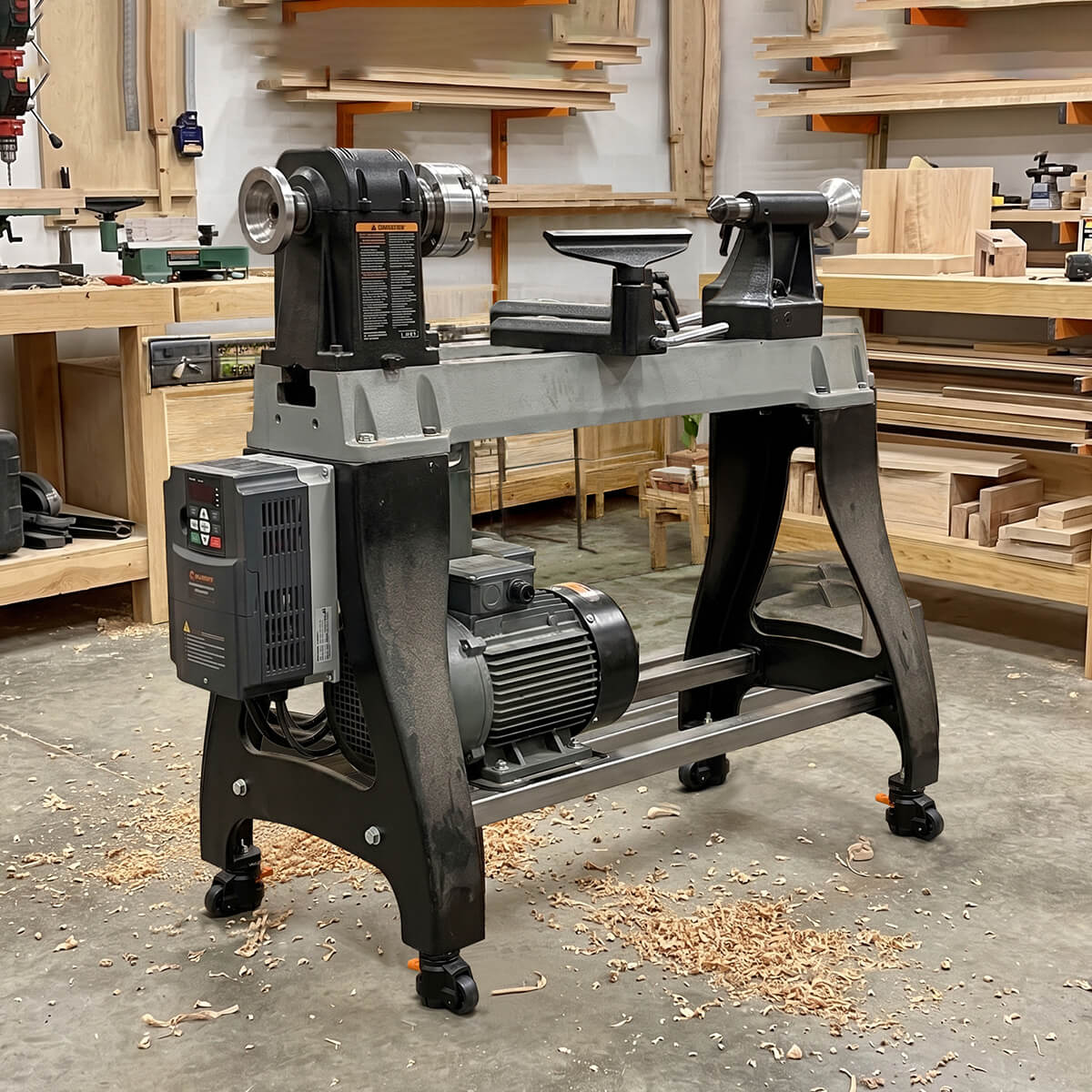
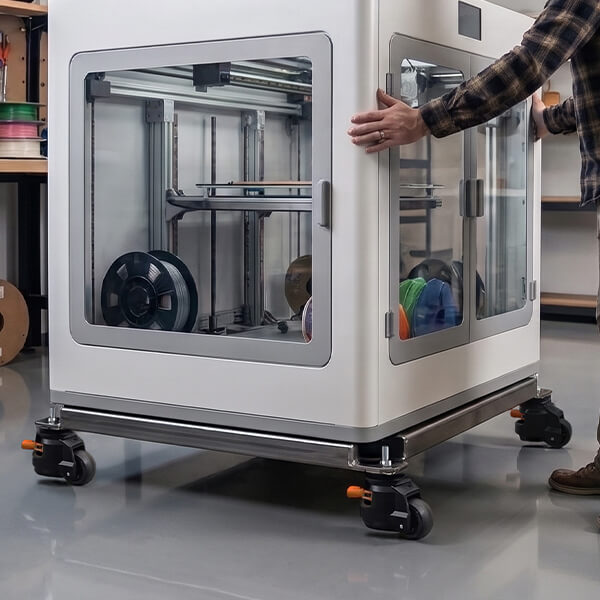
Leveling casters are used on industrial equipment that must be moved into place and then stabilized for work. Common applications include workbenches, assembly fixtures, inspection stations, packaging tables, equipment carts, machine stands, and mobile storage or material-handling units. The right application depends on the equipment's load, mounting design, final height, floor, movement frequency, and stability requirements.
They are not a universal replacement for fixed machine feet or every type of industrial wheel. Select a leveling caster only after confirming that the equipment frame and mounting connection can safely support the intended rolling and supported positions.
For current models and mounting options, start with Holkie's leveling casters collection. For a multi-unit project or a custom equipment design, use the Bulk Order page after preparing the application details in this guide.
At a Glance: Where Leveling Casters Are Used
| Application | Why leveling may be useful | Key checks before selecting |
|---|---|---|
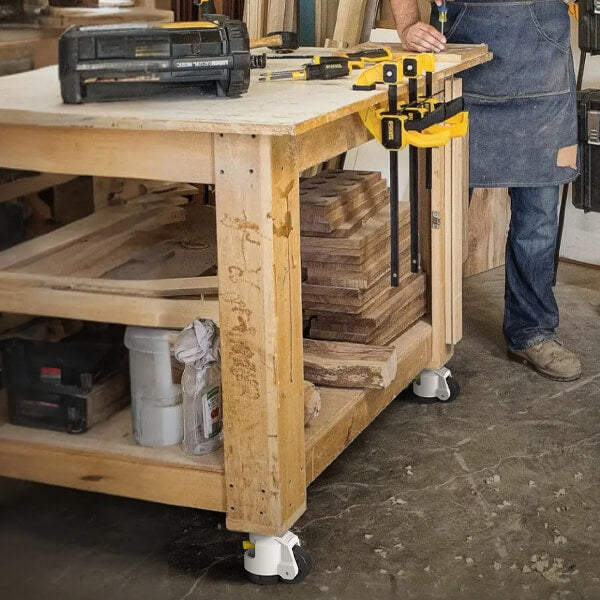
| Workbenches and shop tables | Move a station, then reduce rocking at the work location | Frame strength, installed height, leveling range |
| Assembly fixtures | Reposition fixtures between work cells or production changes | Loaded weight, operator force, fixture alignment |
| Inspection and test stations | Position a station and support a stable working surface | Vibration, height, floor contact, equipment sensitivity |
| Packaging and kitting tables | Adjust layouts and keep work surfaces stable in use | Movement frequency, aisle clearance, stored materials |
| Equipment carts | Move tools or equipment, then keep the cart in a working position | Center of gravity, wheel clearance, push force |
| Machine stands and auxiliary equipment | Reposition support equipment during setup or maintenance | Mounting interface, load transfer, final equipment height |
| Mobile storage and material units | Move inventory or supplies and stabilize the unit at a workstation | Total loaded weight, floor joints, access and clearance |
What Industrial Applications Need From a Leveling Caster
Most industrial applications combine two requirements:
- Equipment needs to be moved for cleaning, maintenance, layout changes, or workflow adjustments.
- Equipment needs a stable supported position while people operate, load, or service it.
The specific balance changes by application. A workbench may prioritize a steady work surface and a consistent working height. A packaging table may need frequent repositioning. A machine stand may require careful control of mounting, equipment height, and load transfer.
Before choosing a caster, document the fully loaded working weight, number of casters, mounting dimensions, current installed height, floor condition, and how often the equipment moves. The product page must also make clear whether capacity is stated per caster or per set.
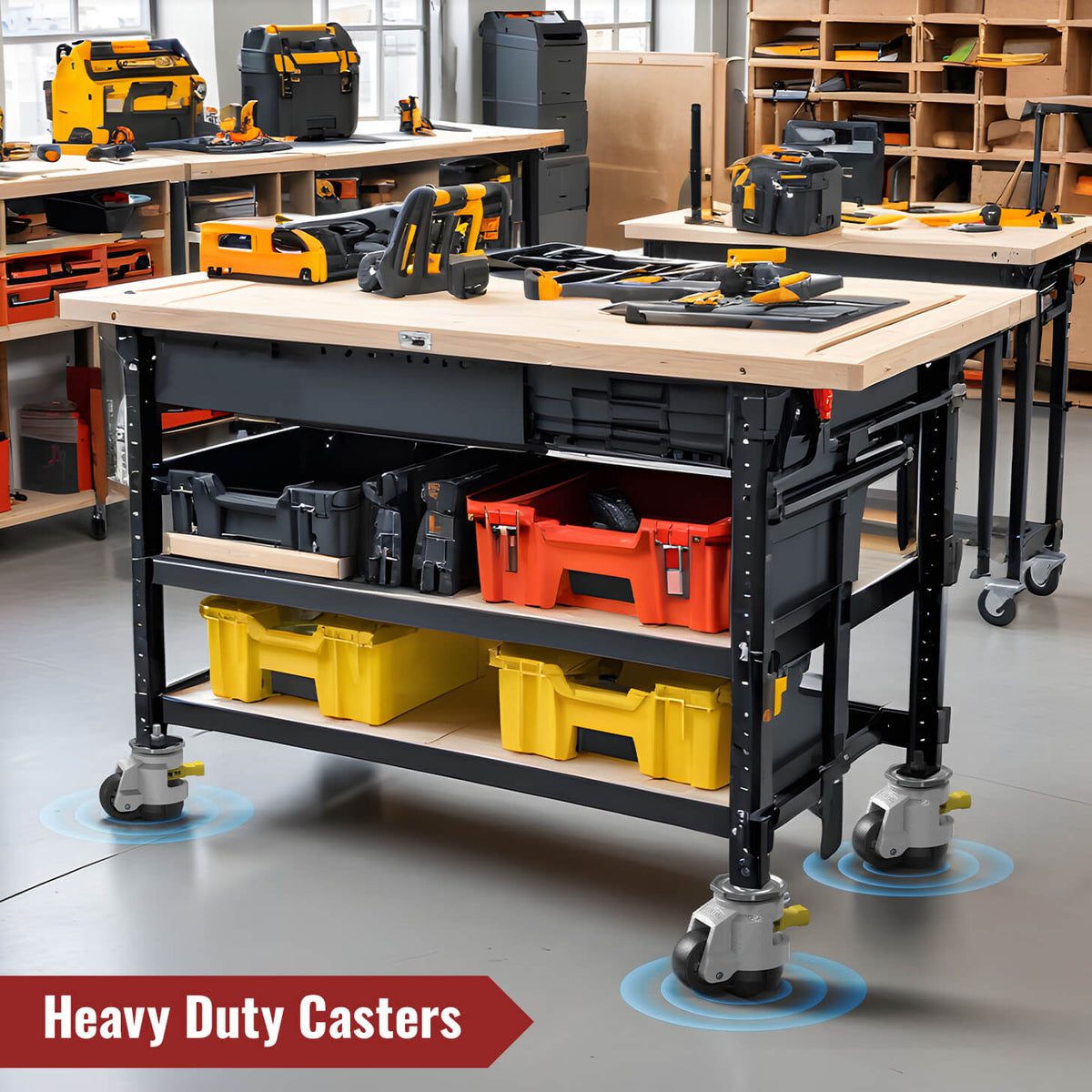
1. Workbenches and Shop Tables
Workbenches are one of the most common uses for leveling casters because a bench may need to move for cleaning, changing a work area, or creating space for large jobs. Once positioned, the work surface should be stable enough for its intended tasks.
Check these points:
- the loaded bench weight, including tools, drawers, vises, and workpieces;
- the bench frame material and reinforcement at each mounting point;
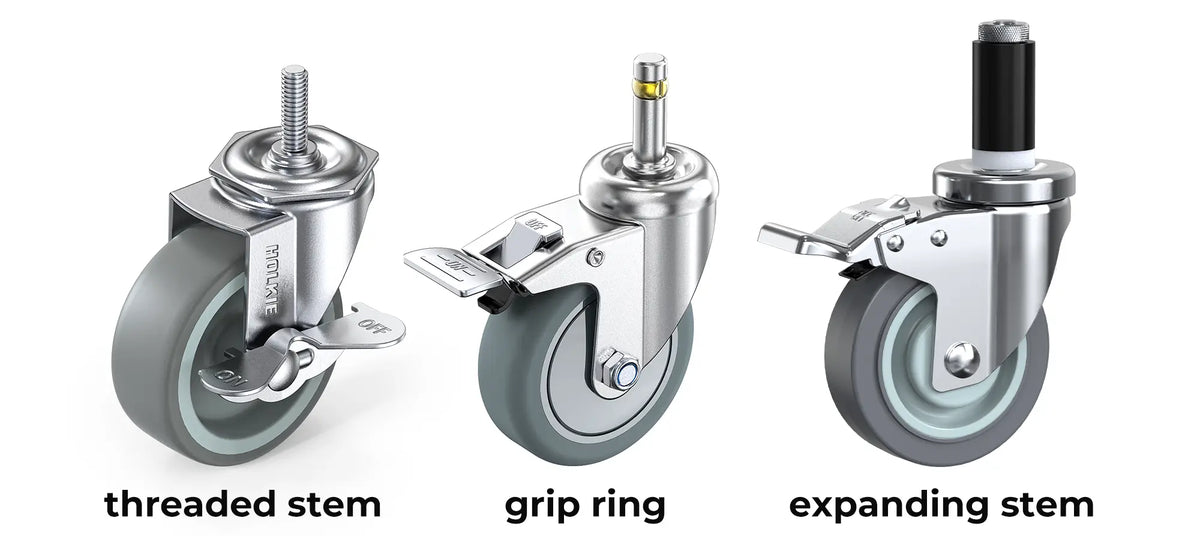
- plate size and bolt-hole spacing, or threaded stem compatibility;
- the final bench height after the caster is installed;
- whether the leveling adjustment can be reached after installation;
- floor flatness and the amount of leveling adjustment required.
For the setup procedure after installation, read How to Level a Workbench With Leveling Casters.
2. Assembly Fixtures and Workholding Tables
Assembly fixtures and workholding tables can benefit from mobility when a work cell changes, a fixture must be brought to another process, or the floor plan is adjusted. When the fixture is used, its supported position should match the accuracy and stability needs of the assembly task.
Selection questions include:
- Does the fixture carry a heavy or off-center part?
- Will operators push, pull, clamp, or apply repeated force at the table?
- Does the fixture need to align with a nearby station, conveyor, or tool?
- Is the frame rigid enough to avoid twisting as the leveling points are adjusted?
- Does the final height remain suitable for the assembly process?
Do not assume that a caster capacity alone confirms fixture stability. The frame, mounting connection, center of gravity, and normal operator forces all matter.
3. Inspection, Test, and Measurement Stations
Inspection and test stations may need to move to support changes in production layout, product flow, or maintenance access. When the station is in use, the important question is whether the equipment can remain stable at its working location.
Review:
- the sensitivity of the work being inspected or measured;
- whether the station experiences vibration from nearby equipment;
- the contact condition between the leveling mechanism and floor;
- the station's required working height;
- cable, air-line, or power-routing clearance;
- whether movement is occasional or part of normal daily use.
A leveling caster should be selected as part of the complete station design. For sensitive or high-value equipment, confirm the equipment manufacturer's installation requirements before changing fixed supports or adding mobile hardware.
4. Packaging, Labeling, and Kitting Tables
Packaging and kitting tables often need layout flexibility. A table may be repositioned to create an order-packing area, change an aisle, support seasonal volume, or improve material flow.
In this application, check:
- the combined weight of cartons, supplies, bins, printers, and accessories;
- movement frequency and available push space;
- clearance at dock plates, thresholds, floor joints, or aisle transitions;
- whether the table must align with conveyors, shelving, or adjacent stations;
- final height for the people who use the work surface;
- the need to stabilize the table before packing or labeling work begins.
If the table moves repeatedly during a shift, movement effort and wheel-floor compatibility may deserve as much attention as the leveling function.
5. Equipment Carts and Service Carts
Equipment carts can carry tools, instruments, components, or service items to where they are needed. A leveling function may be useful when a cart is used as a temporary work surface or supports equipment that should not rock during use.
The main risks are often related to load distribution and stability. Confirm:
- the tallest and heaviest normal load;
- whether the load is centered or offset;
- the cart's base dimensions and available wheel clearance;
- how the cart is pushed, turned, and positioned;
- whether cables, drawers, doors, or accessories interfere with the caster;
- whether the supported position is appropriate for the equipment on the cart.
When a cart is tall or the load is high above the floor, treat center of gravity and operator control as primary selection factors. An application review is sensible when unloading or repositioning the cart would be difficult.
6. Machine Stands and Auxiliary Production Equipment
Machine stands, feeder stands, support tables, and other auxiliary equipment may need mobility for access, changeovers, maintenance, or line reconfiguration. They also need a secure final position relative to the main process.
Before selecting industrial leveling casters, confirm:
- the fully loaded working weight, including material held by the equipment;
- the mounting method and frame reinforcement;
- clearance around guards, access panels, controls, and maintenance points;
- the desired final equipment height and alignment requirements;
- whether vibration, impact, or operator force occurs during operation;
- how the equipment will be moved and who will move it.
For the full industrial selection process, see How to Select Machine Leveling Casters for Industrial Equipment.
7. Mobile Storage and Material-Handling Units
Mobile storage units, bin racks, supply tables, and material-preparation carts may be repositioned to keep materials close to the work area. A leveling caster can be considered when the unit must be stable after it is placed in a specific operating location.
Check:
- the maximum loaded weight rather than the empty rack weight;
- shelf height and the center of gravity when bins are full;
- floor joints, thresholds, debris, or uneven areas on the movement route;
- aisle width and turning clearance;
- access to the leveling adjustment after the unit is loaded;
- whether the unit's storage configuration changes its balance.
For units that carry unusually tall, valuable, or unevenly distributed loads, do not assume a standard configuration is appropriate without reviewing the complete load and frame design.
Application Checklist: Is a Leveling Caster Appropriate?
Use this checklist before adding leveling casters to industrial equipment:
- The equipment genuinely needs both mobility and a stable working position.
- The fully loaded working weight is known.
- The number of casters and expected weight distribution are understood.
- The frame has a suitable plate-mount surface or compatible threaded connection.
- The installed height will not interfere with operators, adjacent equipment, material flow, or alignment.
- The wheel and caster assembly suit the actual floor and movement route.
- The leveling adjustment can be reached and operated after installation.
- The supported position meets the equipment's operational requirements.
If the mounting decision is still unclear, compare Plate Mount vs. Threaded Stem Leveling Casters before ordering.
Common Mistakes Across Industrial Applications
Selecting only from a capacity number
Capacity is necessary, but it does not verify the mounting interface, frame strength, installed height, or floor suitability. Use the fully loaded working weight and confirm the product page's stated capacity basis.
Ignoring stored materials and accessories
Industrial tables and carts are frequently heavier in service than at installation. Include drawers, bins, tools, fixtures, fluids, batteries, and the heaviest normal workpiece in the working weight.
Adding mobility without checking final height
A caster assembly can change work-surface height, access to controls, or alignment with adjacent equipment. Compare the complete installed height before changing fixed feet or casters.
Using an unverified mounting conversion
Do not replace a threaded stem with a plate mount, or the reverse, unless the frame can safely support the new connection. A near-match thread or improvised hole in thin material is not a reliable mounting plan.
Treating every industrial floor the same
Smooth sealed concrete, expansion joints, thresholds, debris-prone areas, and sloped sections create different movement and clearance conditions. Describe the real route the equipment will travel.
What to Prepare for a B2B or OEM Inquiry
For a batch purchase, replacement program, or OEM project, provide:
- equipment type and application;
- empty and fully loaded working weight;
- caster quantity per unit and total order quantity;
- mounting drawings, dimensions, and photos;
- current and desired installed height;
- floor conditions and movement route;
- movement frequency and handling method;
- any clearance, alignment, or stability requirements;
- operating environment, including moisture, debris, or cleaning exposure;
- delivery destination and purchasing schedule.
This information allows the discussion to start with the real equipment requirements rather than a product name alone. Submit it through Holkie's Bulk Order page for commercial, multi-unit, or OEM requirements.
Frequently Asked Questions
What are the most common applications for leveling casters in industrial settings?
Common applications include workbenches, shop tables, assembly fixtures, inspection stations, packaging tables, equipment carts, machine stands, and mobile storage or material-preparation units. Suitability still depends on the equipment frame, load, mounting connection, floor, and operating needs.
Are leveling casters suitable for industrial workbenches?
They can be suitable when the workbench frame supports the selected mounting method and the final height, load, and stability requirements are confirmed.
Can leveling casters be used on machine stands?
They may be used on machine stands or auxiliary equipment when the mounting connection, frame design, total working load, final height, and required supported position are appropriate for the selected caster.
Are industrial leveling casters designed for frequent movement?
That depends on the specific caster and application. For frequent movement, review the floor, route, wheel design, movement effort, clearance, and normal handling process in addition to the leveling function.
Can I use leveling casters on an uneven floor?
They may help compensate for limited floor variation within the available adjustment range. First confirm the floor condition, required leveling range, and equipment stability requirements.
Do leveling casters replace fixed feet?
They can replace fixed feet only when the equipment design, mounting point, load, final height, and supported operating condition have been reviewed. They are not automatically appropriate for every machine or station.
What measurements are needed before ordering?
Measure loaded equipment weight, number of casters, plate dimensions and hole spacing or threaded stem details, installed height, clearance, leveling range, and the floor or movement conditions.
When should a business request an application review?
Request a review for heavy, tall, custom-built, high-value, difficult-to-unload, or multi-unit equipment. Include a measured drawing and photos of the mounting area.
Choose by Application, Then Verify the Details
Leveling casters can support flexible industrial layouts when equipment must move and then remain stable at a working position. Start with the actual application, then verify load, mounting, height, floor conditions, movement frequency, and operational stability before selecting a model.
Browse Holkie's leveling casters for current options. For repeat orders, OEM equipment, or multi-unit projects, submit your requirements through the Bulk Order page.
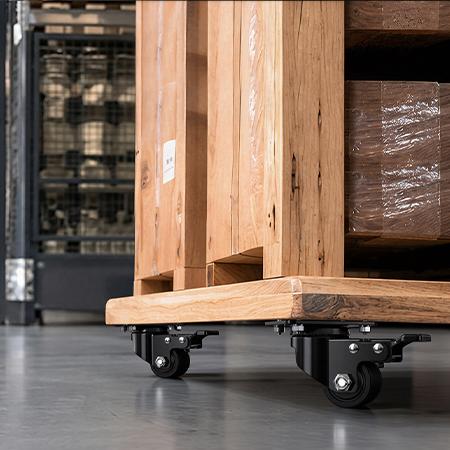




How to Select Machine Leveling Casters for Industrial Equipment
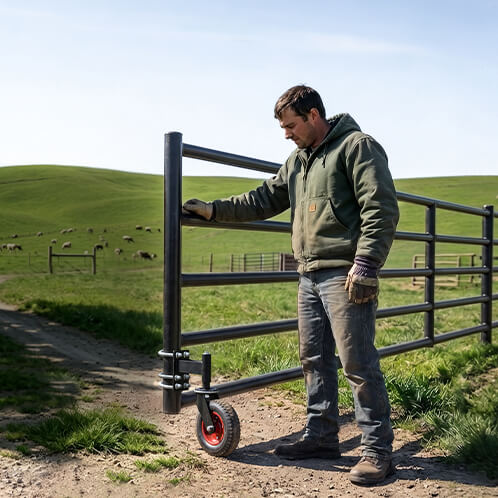
Are Leveling Casters Self-Leveling? How Adjustable Leveling Casters Work