
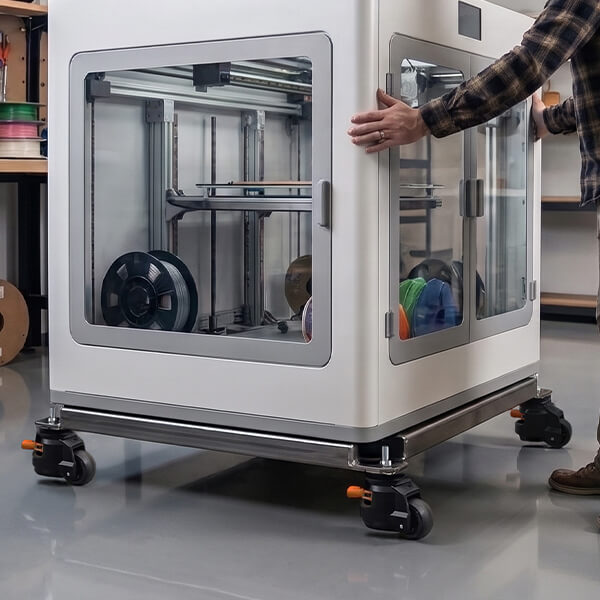
Machine leveling casters are a practical choice when industrial equipment must be moved for positioning, cleaning, maintenance, or layout changes and then stabilized for operation. Select them by reviewing the fully loaded equipment weight, mounting connection, installed height, leveling range, floor conditions, movement frequency, and required operating stability.
The correct machine leveling caster is not determined by wheel size or stated capacity alone. The caster, mounting point, frame, and leveling mechanism must work together as one system.
If you are comparing current models, start with Holkie's leveling casters collection. For a multi-unit, OEM, or commercial application, prepare the measurements below before requesting a quote through the Bulk Order page.
Quick Selection Table
| Equipment or application condition | Selection priority |
|---|---|
| Machine is moved occasionally and stabilized during use | Confirm the caster can transition between rolling and supported positions |
| Equipment has a flat reinforced base | Check plate dimensions, hole spacing, and fastener access |
| Equipment has threaded legs or sockets | Match thread diameter, pitch, engagement, and stem clearance |
| Machine carries tools, fixtures, materials, or workpieces | Calculate the fully loaded working weight |
| Floor has joints, debris, slopes, or uneven areas | Review wheel construction, diameter, clearance, and leveling range |
| Equipment height is tightly controlled | Compare complete installed height, not only wheel diameter |
| Multiple machines will be purchased | Standardize the model, mounting method, and replacement parts where practical |
What Makes Machine Leveling Casters Different?
Industrial equipment often has two operating requirements that must be balanced:
- The equipment needs to move into position.
- The equipment needs a stable supported position while it is being used.
A machine leveling caster combines a rolling element with an adjustable leveling function. After the equipment is positioned, the leveling mechanism can help transfer support to the intended contact points, depending on the product design and installation.
This makes the selection more application-specific than choosing a general replacement wheel. The product must fit the equipment mechanically, support the working load, and provide the required clearance and adjustment range.
Do not describe a model as self-leveling unless the current product specification clearly supports that claim. A manually adjusted leveling caster should be described according to its actual adjustment method.
Step 1: Calculate the Fully Loaded Working Weight
Start with the heaviest normal operating condition, not the empty machine weight. Include:
- the equipment or machine frame;
- tools, fixtures, batteries, tanks, or accessories;
- stored materials or supplies;
- the heaviest normal workpiece;
- any load that can remain on the equipment while it is moved.
Then determine how many casters will carry the equipment and how the frame transfers weight to each mounting point. A simple division by the number of casters may not represent the real load on every caster because floors, frames, and adjustment positions can distribute weight unevenly.
Use the capacity basis shown on the current product page. Confirm whether the published value is stated per caster, per set, or under a specific test or application condition. Capacity wording must remain consistent between the product page, collection page, product structured data, and Merchant Center feed.
Step 2: Confirm the Mounting Connection
The mounting connection must match the equipment frame exactly.
Plate mount machine leveling casters
Use a plate mount when the machine has a flat, reinforced area that can safely accept the plate and its fasteners. Measure:
- available mounting surface length and width;
- plate length and width;
- hole diameter;
- center-to-center hole spacing;
- frame thickness and material;
- access for bolts, washers, and nuts;
- clearance from nearby braces, panels, and components.
Matching the outside plate size is not enough. Hole spacing and the strength of the frame around the holes also matter.
Threaded stem machine leveling casters
Use a threaded stem when the equipment has a compatible threaded socket, welded nut, insert, tapped hole, or suitable through-hole. Measure:
- thread diameter;
- thread pitch;
- usable thread depth;
- required stem length;
- nut, washer, or locking arrangement;
- clearance around the stem and adjustment mechanism.
Do not force a stem with a similar-looking thread. Diameter without pitch is not a complete thread specification, and insufficient engagement can prevent a secure installation.
For a more detailed mount comparison, see Plate Mount vs. Threaded Stem Leveling Casters.
Step 3: Check Installed Height and Leveling Range
Installed height affects machine ergonomics, material flow, access to controls, and alignment with nearby equipment. Compare the complete installed height of the selected caster with the current leg, foot, or caster assembly.
Also check:
- minimum and maximum support height;
- available adjustment travel;
- clearance between the wheel and the frame;
- clearance for the leveling foot or pad;
- whether the adjustment can be reached after installation;
- whether the machine remains within its required working height.
Wheel diameter alone does not tell you the final height. The mounting hardware, caster body, stem or plate, and deployed leveling mechanism all contribute to the installed position.
Step 4: Match the Floor and Movement Conditions
Describe the actual floor rather than simply calling it "industrial." Consider whether the equipment moves over:
- sealed concrete;
- smooth factory flooring;
- thresholds or floor joints;
- debris-prone areas;
- sloped or uneven sections;
- areas where floor marking or surface protection is important.
Then identify how often the equipment moves and whether it is pushed by hand or moved as part of a repeated workflow. These details help determine the importance of wheel diameter, wheel material, rolling resistance, clearance, and floor-contact behavior.
If the equipment is only repositioned occasionally, the leveling function may be the main selection priority. If it moves repeatedly, movement effort, turning space, wheel durability, and operator control deserve more attention.
Step 5: Review the Operating and Stability Requirements
Ask how the equipment behaves when it is in its supported position:
- Does it need to remain stationary during normal operation?
- Does it vibrate or experience repeated impacts?
- Are operators applying force to a handle, table, or work surface?
- Must the equipment be aligned with another machine or conveyor?
- Does the frame need to remain stable while a component is serviced?
- Is the contact surface under the leveling foot suitable for the load?
The caster is only one part of this system. A flexible frame, weak mounting surface, loose fastener, or unsuitable leveling-foot contact area can affect stability even when the caster's stated capacity appears adequate.
For a basic adjustment sequence, read How to Level a Workbench With Leveling Casters.
Common Selection Mistakes
Choosing by maximum capacity only
A high capacity does not correct a mismatched plate, incorrect thread, weak frame, insufficient engagement, or unsuitable installed height.
Using the empty machine weight
The machine may be moved with fixtures, tools, materials, or a workpiece still loaded. Use the heaviest normal working condition.
Treating similar threads as compatible
Confirm both diameter and pitch, then check usable engagement and the required locking hardware.
Ignoring the final working height
Replacing a fixed foot with a caster can change the equipment height and the relationship between operators, controls, work surfaces, and adjacent equipment.
Assuming every caster carries an equal share
Frame rigidity, floor condition, and adjustment position can change how weight is transferred. Ask for an application review when the equipment is heavy, valuable, tall, or difficult to unload.
Ordering without replacement measurements
For a replacement project, record the existing mounting pattern and complete installed height before removing the original caster. Photos with a ruler and a dimensioned sketch can prevent an avoidable mismatch.
B2B Quote Preparation Checklist
For a machine leveling caster quote, prepare the following information:
- equipment type and a short description of its function;
- empty weight and fully loaded working weight;
- number of casters required per machine;
- quantity of machines;
- plate or stem mounting measurements;
- current installed height and desired final height;
- required leveling range;
- wheel diameter or clearance limitations;
- floor material and obstacles;
- movement frequency and typical push direction;
- operating environment, including moisture, debris, or cleaning requirements;
- photos, drawings, or CAD details of the mounting area;
- delivery destination and target purchasing schedule.
For OEM or repeat orders, also identify whether the same mounting interface will be used across future equipment. Standardizing the connection can simplify installation, spare-parts planning, and replacement purchasing.
Submit these details through Holkie's Bulk Order page so the application can be reviewed with the relevant mounting and quantity information.
Frequently Asked Questions
What are machine leveling casters used for?
They are used on equipment that needs to be repositioned and then supported or stabilized at a working location, subject to the product design and correct installation.
How do I choose machine leveling casters for heavy equipment?
Start with the fully loaded working weight, then confirm the mounting connection, frame strength, installed height, leveling range, floor condition, and movement requirements. Verify the current product page for the capacity basis.
Are industrial leveling casters suitable for every machine?
No. The caster must match the machine's mounting interface, load, height, clearance, floor, and operating conditions. A quote or application review is appropriate when those details are uncertain.
Should I choose a plate mount or threaded stem?
Choose plate mount when the frame provides a compatible reinforced bolt-on surface. Choose threaded stem when it provides the exact thread, sufficient engagement, and a load-capable mounting point.
Do larger wheels always work better on industrial equipment?
Not always. A larger wheel may help with certain clearances or floor conditions, but it can also change installed height, turning space, and equipment geometry. Select the complete caster assembly for the application.
Can leveling casters replace fixed machine feet?
They may be suitable when the equipment frame, load, mounting point, and required supported position are compatible. Confirm the final height and support condition before making the change.
What information is needed for a commercial leveling caster order?
Provide the equipment weight, caster quantity, mounting dimensions, desired height, leveling range, floor conditions, movement frequency, photos or drawings, delivery location, and purchasing quantity.
Should I request a quote before selecting a model?
Request an application review when the equipment is heavy, custom-built, high-value, difficult to unload, or being purchased in multiple units. A measured drawing and complete load information make the review more useful.
Final Selection Checklist
Before ordering machine leveling casters, confirm:
- The fully loaded working weight and capacity basis are clear.
- The plate or threaded stem connection matches the equipment.
- The frame and mounting area are strong enough for the application.
- The installed height and leveling range fit the equipment.
- The wheel and caster assembly suit the floor and movement conditions.
- The leveling adjustment can be reached and secured after installation.
- The order quantity, spare requirements, and delivery details are documented.
For current product options, visit Holkie's leveling casters collection. For multi-unit, commercial, or OEM requirements, use the Bulk Order page to submit the application details.

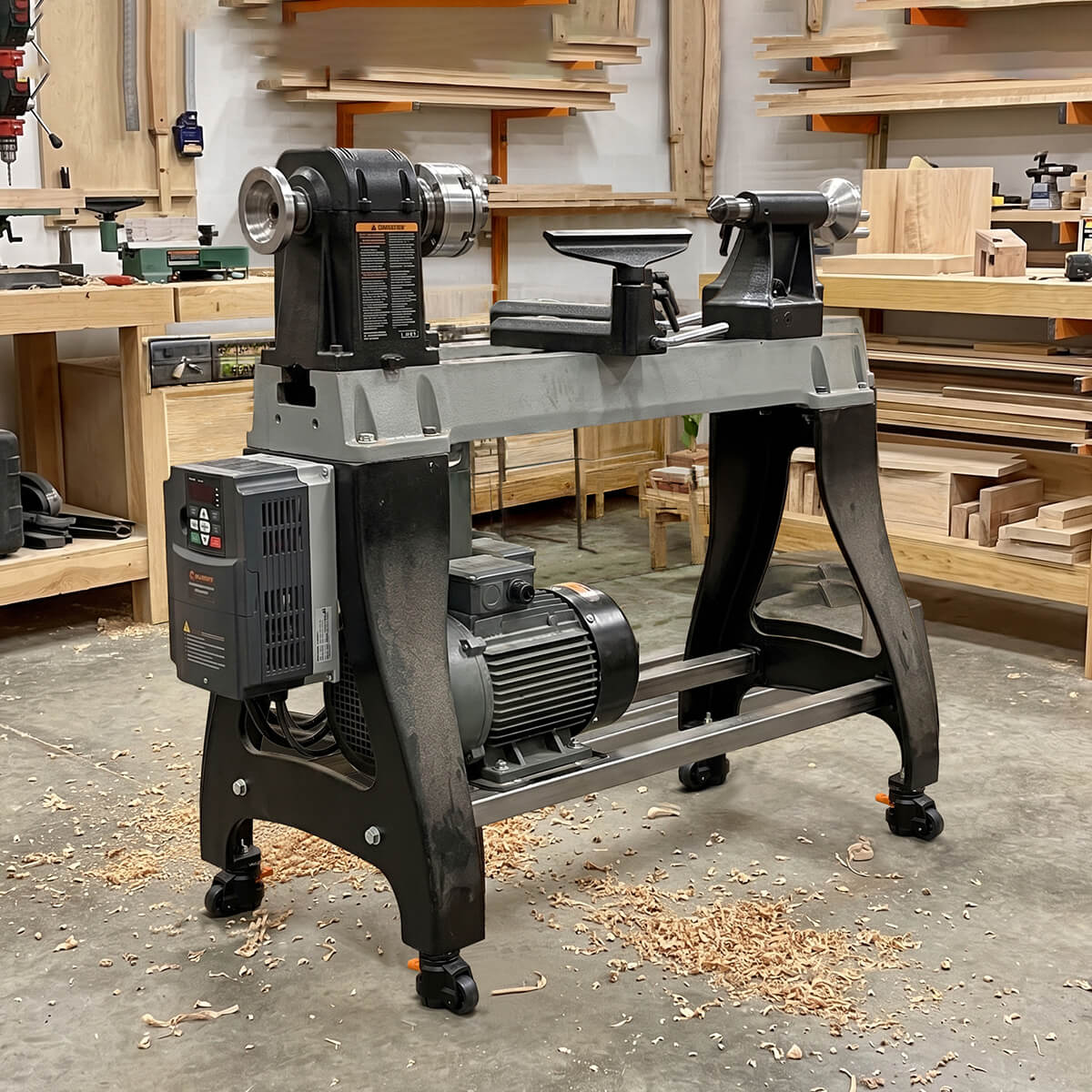
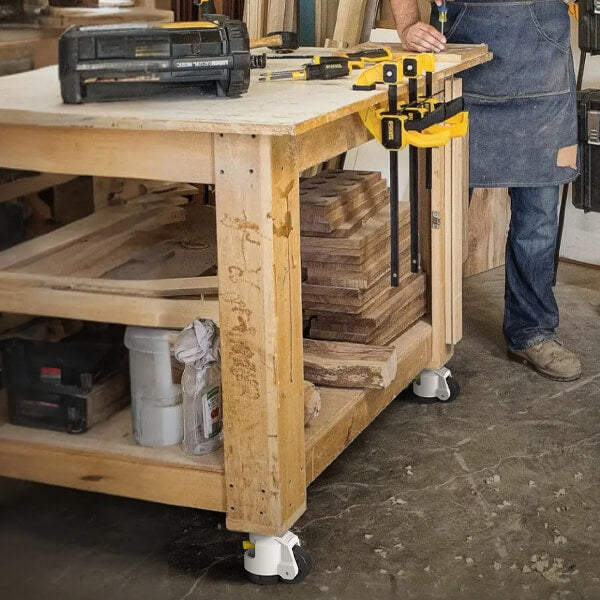


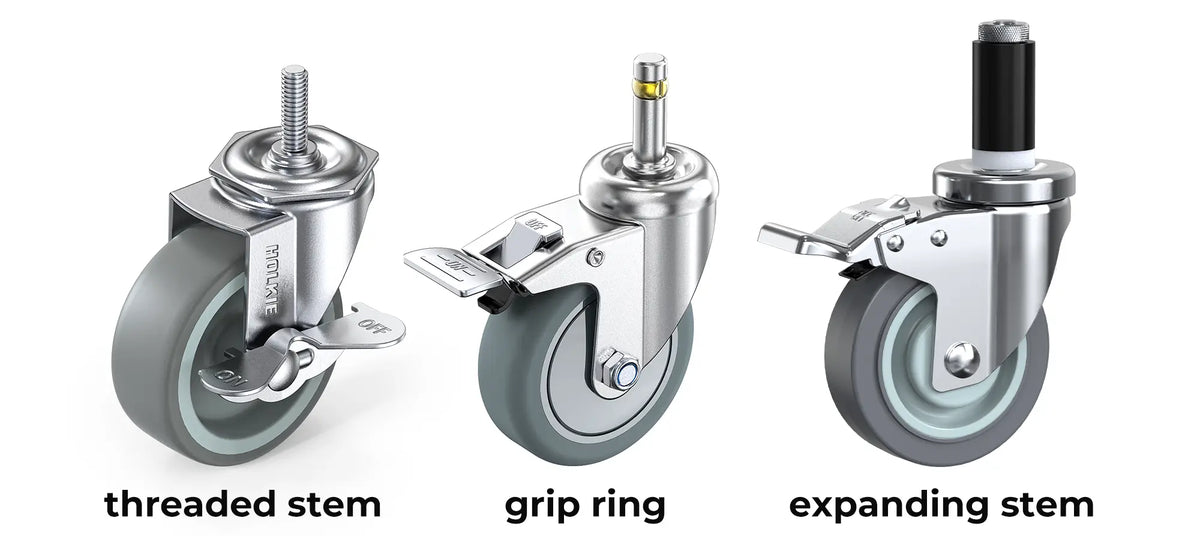

Plate Mount vs. Threaded Stem Leveling Casters: How to Choose
7 Industrial Applications for Leveling Casters