A heavy gate that drags across the ground can be difficult to open and close. It may scrape against concrete, catch on gravel, damage the bottom edge, or place extra stress on the hinges.
A sagging gate does not always have one single cause. Loose hinges, a shifting gate post, a weak frame, or the weight of a large gate can all contribute to the problem. In some cases, a support wheel can help carry part of the gate load and make everyday operation smoother.
This guide explains how to check a sagging gate and when a spring-loaded gate wheel may be the right solution.
What Causes a Gate to Sag?
A gate may begin to sag for several reasons:
- Loose or worn hinges
- A gate post that has shifted or moved out of plumb
- A heavy gate frame without enough support
- A weakened or twisted gate structure
- Uneven ground beneath the gate
- Long-term stress from repeated opening and closing
The first step is to determine whether the problem comes from the gate hardware, the gate frame, or the supporting post.
Step 1: Check the Gate Hinges
Inspect the upper and lower hinges for loose bolts, damaged hardware, rust, or visible bending. Tighten loose fasteners and check whether the gate moves up and down when you lift the latch side.
If the hinge hardware is damaged, replacing or adjusting the hinges may be necessary. A gate wheel can reduce the load carried by the hinges, but it cannot repair a broken hinge.
Step 2: Inspect the Gate Post
Place a level against the hinge post and check whether it remains vertical. If the post has shifted, the gate may continue to sag even after the hinges are adjusted.
A loose or leaning post may require reinforcement or resetting. Make sure the post is stable before installing a support wheel. A wheel is designed to support the gate during movement, not to compensate for a severely unstable post.
Step 3: Check the Gate Frame
Look at the corners, cross braces, welds, and mounting points. A wooden gate may need additional bracing if the frame has changed shape. A metal gate may need repair if the tubing, welds, or mounting brackets have bent.
A diagonal brace can help stabilize some wooden gate frames. However, the correct repair depends on the gate design and the cause of the sag.
Step 4: Look for Ground Contact
Open and close the gate slowly and identify where the bottom edge touches the ground. Dragging may occur only on one section of the driveway or yard, especially when the surface slopes or changes from concrete to gravel.
If the gate is structurally sound but needs support across uneven ground, a spring-loaded gate wheel may help maintain smoother contact with the surface.
How a Spring-Loaded Gate Wheel Helps
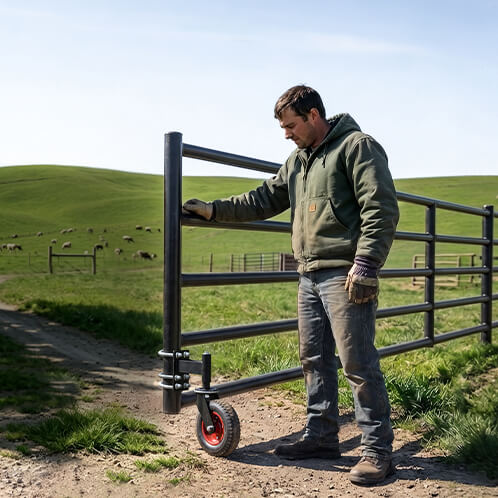
A spring-loaded gate wheel attaches near the free end of the gate and supports part of the gate's weight as the gate moves.
The wheel can help:
- Reduce dragging along the ground
- Support the latch side of a heavy gate
- Relieve stress on gate hinges
- Improve rolling movement over outdoor surfaces
- Help maintain support across minor changes in ground level
The spring mechanism is important because the wheel can respond to small changes in surface height. Instead of using a fixed-height support, a spring-loaded design provides movement as the gate opens and closes.
Why Choose a Solid Rubber Gate Wheel?
A solid rubber tire does not require inflation. It does not depend on air pressure and will not go flat because of an air leak or puncture.
This makes a solid rubber gate wheel a practical flat-free alternative for customers replacing a compatible pneumatic gate wheel. It is suitable for users who prefer less tire maintenance while supporting a heavy outdoor gate.
The tire is designed for common outdoor surfaces such as:
- Grass
- Gravel
- Dirt
- Concrete
- Uneven driveways
- Mixed residential or farm surfaces
A solid rubber tire is not the same as an air-filled pneumatic tire. Before purchasing, confirm that a flat-free tire meets your preferred ride and maintenance requirements.
Featured Solution: 8 in Spring-Loaded Gate Wheel
The 8 in Heavy-Duty Spring-Loaded Gate Wheel is designed to help support compatible heavy gates and reduce dragging during regular use.
Key features include:
- 750 lb load capacity per wheel
- 8 in solid rubber tire
- Flat-free, non-inflatable design
- Built-in spring with approximately 1-7/8 in of travel
- Swivel wheel movement
- Heavy-duty steel bracket and mounting plate
- Hardware for wood and metal gate installation
The wheel can be used with compatible driveway gates, farm gates, ranch gates, fence gates, wood gates, metal tube gates, pipe gates, chain-link gates, vinyl gates, PVC gates, and aluminum gates.
Shop the 8 in Spring-Loaded Gate Wheel
How to Choose the Right Gate Wheel
Before ordering a gate wheel, check the following measurements and conditions:
- Measure the available mounting area.
- Confirm the gate has enough clearance for an 8 in wheel.
- Check the gate frame material and shape.
- Confirm the required load capacity.
- Compare the mounting plate and bolt spacing.
- Make sure the wheel can reach the ground without lifting the gate too high.
- Consider the surface where the gate will be used.
The 750 lb rating applies to one wheel under properly installed conditions. The actual result also depends on the gate structure, mounting method, hinge condition, ground surface, and how the load is distributed.
When a Gate Wheel Is Not Enough
A support wheel may not solve the problem if:
- The gate post is leaning or unstable
- The hinges are broken or severely bent
- The gate frame is twisted
- The mounting area is damaged
- The gate is much heavier than the wheel rating
- The gate has insufficient clearance for the wheel
In these situations, repair the underlying structure before relying on a support wheel. A gate wheel works best as part of a properly installed gate system.
Frequently Asked Questions
Will a gate wheel stop my gate from sagging?
A gate wheel can help support the gate and reduce additional dragging or hinge stress. It may improve the operating height of a compatible gate, but it cannot repair a leaning post, broken hinge, or severely damaged frame.
Can I install a gate wheel on a wooden gate?
Yes. This model includes hex bolts, nuts, and washers for compatible solid wood gate applications. Confirm the mounting location and make sure the wood is strong enough to support the hardware.
Can I install it on a metal gate?
Yes. U-bolts are included for compatible round or square metal tube frames. Check the tube dimensions and mounting clearance before installation.
Is the tire pneumatic?
No. The tire is solid rubber and does not require inflation. It is a flat-free alternative to a traditional air-filled pneumatic tire.
How much weight does it support?
The wheel supports up to 750 lb per wheel when properly installed. This rating should not be used as a substitute for checking the strength of the gate frame and mounting structure.
Will it work on gravel or grass?
The solid rubber wheel is designed for common outdoor surfaces, including grass, gravel, dirt, concrete, and uneven driveways. Surface conditions can affect rolling resistance and gate performance.
A Smoother Way to Support a Heavy Gate
A sagging gate should be inspected from the hinges to the post and the frame. Once the structure is stable, a spring-loaded gate wheel can provide additional support where the gate needs it most.
For compatible heavy gates, an 8 in solid rubber spring-loaded gate wheel offers flat-free operation, all-terrain support, and up to 750 lb of load capacity per wheel.