
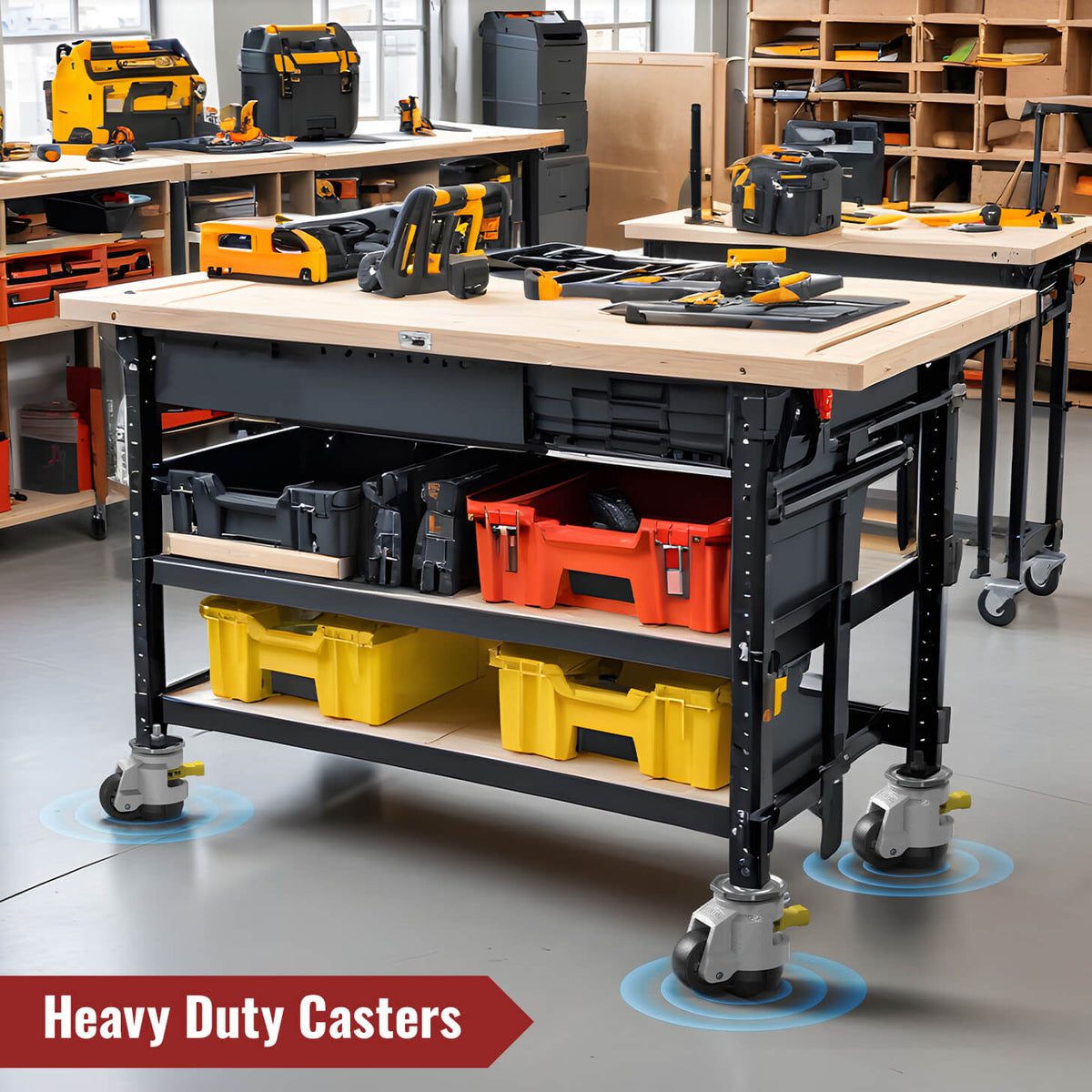
Most leveling casters are not self-leveling in the automatic sense. An operator usually moves the equipment into its final position and then manually adjusts the caster's leveling mechanism until the equipment is supported and stable. A wheel brake, a manually adjusted leveling foot, and an automatic leveling system are different functions and should not be treated as the same thing.
If you need equipment that can roll and then be stabilized at its work location, begin with Holkie's leveling casters collection. Before ordering, confirm the current product page's adjustment method, mounting option, installed height, load-capacity basis, and leveling range.
Quick Answer: What Does "Self-Leveling" Mean?
| Term | What it means | What the operator does |
|---|---|---|
| Manually adjusted leveling caster | A caster with a leveling mechanism that is adjusted by hand, handle, foot, or specified tool | Positions the equipment, operates the adjustment, and checks stability |
| Wheel brake | A brake that restricts wheel rotation and/or swivel movement, depending on the design | Engages the brake after positioning |
| Retractable caster | A mechanism that changes the equipment between rolling and supported states | Operates the handle, pedal, or other specified mechanism |
| Automatic self-leveling system | A system that levels without the operator manually adjusting each support point | Follows the system's automated controls or setup process |
Do not select a product from the search term alone. Read the product specification and operating instructions to confirm what the leveling mechanism actually does.
Why "Self-Leveling Casters" Can Be Misleading
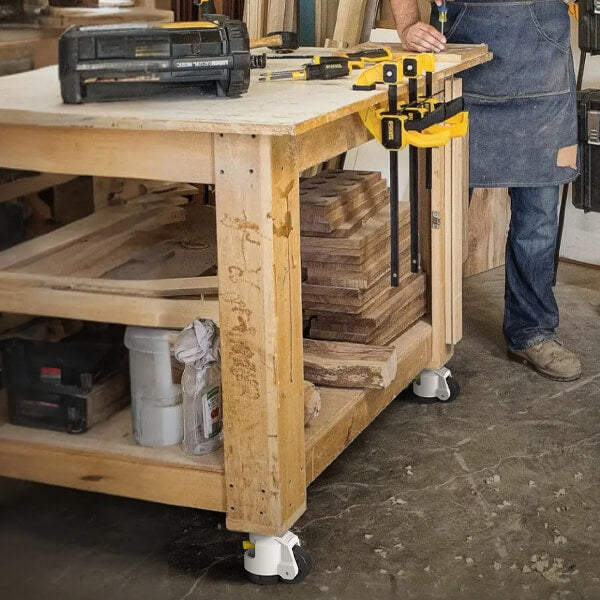
People often search for "self leveling casters" when they want a workbench, machine stand, cart, or table that will not rock on a floor with small differences in height. That is a real need, but the mechanism matters.
A manually adjusted leveling caster can help support and stabilize equipment after you set it up. It does not automatically sense the floor, calculate the required adjustment, or independently level all corners of the equipment.
For accurate product information, use the wording shown on the live product page. If the product requires an operator to turn a handle, adjust a foot, use a ratchet, or set a mechanism after moving the equipment, describe it as a manually adjusted leveling caster rather than as an automatic self-leveling caster.
How Manually Adjusted Leveling Casters Work
The exact design differs by model, but the basic sequence is usually:
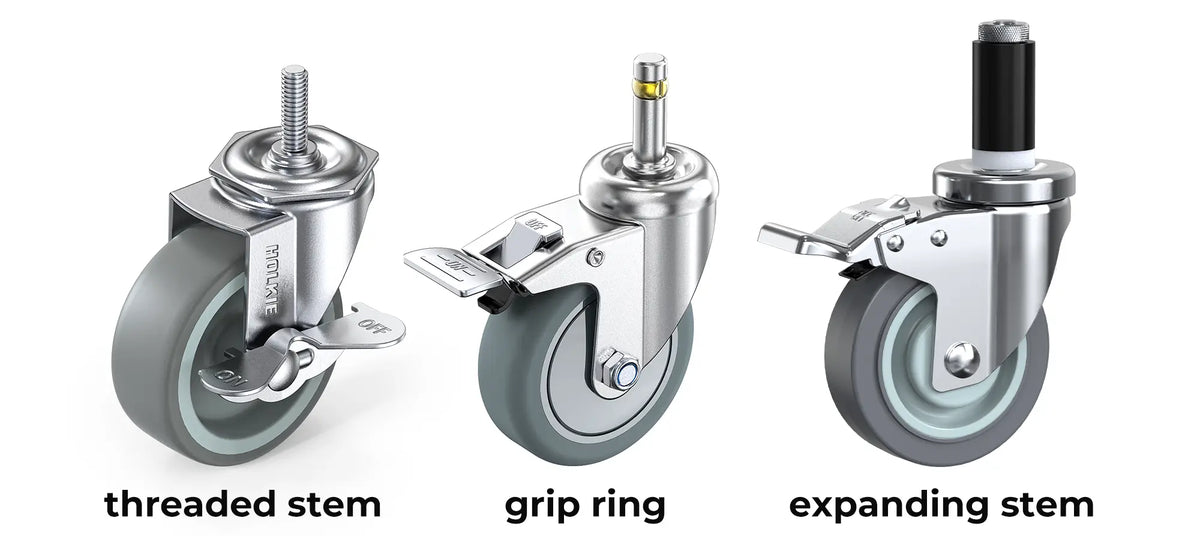
- Install the casters with a compatible plate mount or threaded stem.
- Move the equipment to its final operating position.
- Operate the specified leveling mechanism.
- Adjust the support points gradually until the frame is stable.
- Check the work surface or equipment position as required by the application.
- Recheck stability under the normal working load.
The caster's wheel supports movement. The leveling mechanism is used to create the intended supported position after the equipment is placed. Follow the instructions and operating limits for the selected model.
For a workbench-specific setup guide, read How to Level a Workbench With Leveling Casters.
Manual Leveling Caster vs. Wheel Brake
A wheel brake can help resist rolling or swivel movement, depending on the caster design. It is not automatically equivalent to a leveling foot or a supported leveling position.
| Question | Wheel brake | Manually adjusted leveling caster |
|---|---|---|
| Primary purpose | Restrict movement of the wheel and/or swivel | Help support and stabilize equipment after positioning |
| Adjustment needed | Engage the brake mechanism | Operate the leveling mechanism as specified |
| Can it correct minor floor differences? | Not by itself | May do so within the model's stated adjustment range |
| Does it confirm a stable work surface? | No | Stability must still be checked after adjustment |
| What must be verified? | Brake design, floor, load, and operating use | Mounting, load, height, adjustment range, and floor contact |
If the equipment must move frequently and change between rolling and supported positions as part of the workflow, compare the product function with Leveling Casters vs. Retractable Casters.
What Leveling Casters Can and Cannot Do
What they can help with
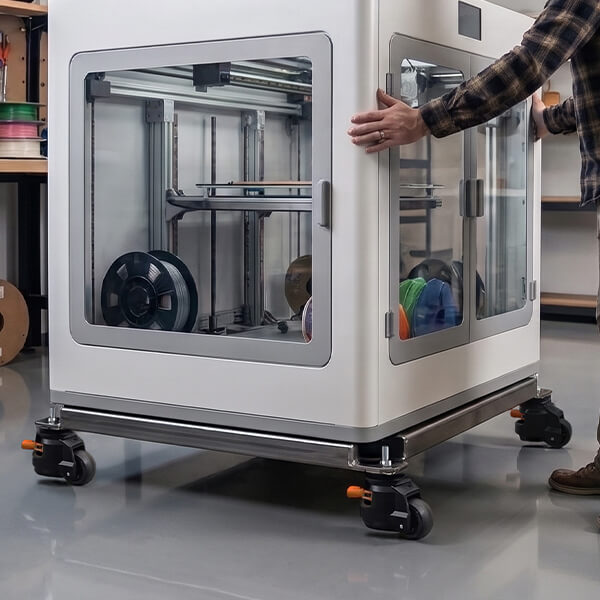
Subject to the selected model and correct installation, leveling casters can help equipment:
- move into a new position;
- compensate for limited floor variation within the stated adjustment range;
- reduce rocking after the leveling mechanism is adjusted;
- maintain a chosen working position when the equipment frame and mount are suitable.
What they do not automatically solve
Leveling casters do not eliminate the need to verify:
- a severely sloped, damaged, or structurally unsuitable floor;
- a flexible, weak, or poorly reinforced equipment frame;
- incorrect plate dimensions, hole spacing, or threaded stem compatibility;
- a load that exceeds the product's stated capacity basis;
- an unsuitable installed height;
- an inaccessible adjustment mechanism;
- operating forces, vibration, or center-of-gravity concerns.
The caster is one part of the equipment support system. The frame, mounting hardware, floor, load, and final setup determine whether the application is appropriate.
How to Choose an Adjustable Leveling Caster
Use these checks before narrowing down a model.
1. Confirm the actual movement requirement
Ask whether the equipment moves occasionally for cleaning, maintenance, or layout changes, or whether it moves repeatedly during normal work. Frequent movement may increase the importance of wheel selection, push effort, clearance, and operating access.
2. Confirm the supported-position requirement
Define what "stable" means for the application. A shop table, assembly fixture, inspection station, and machine stand can have different requirements for height, alignment, vibration, operator force, and floor contact.
3. Confirm mounting compatibility
For a plate mount, measure the plate area, hole size, hole spacing, frame thickness, and fastener access. For a threaded stem, measure thread diameter, pitch, usable engagement, stem length, and clearance.
Read Plate Mount vs. Threaded Stem Leveling Casters if the mounting style is not yet clear.
4. Confirm fully loaded weight and capacity wording
Use the heaviest normal operating condition, including tools, fixtures, stored materials, and workpieces. Then check whether the product page states capacity per caster, per set, or under a particular condition. Do not compare capacity figures until the basis is clear.
5. Confirm height and adjustment range
Compare the complete installed height with the current legs, fixed feet, or casters. Confirm that the equipment can reach its required working height and that the stated leveling range is suitable for the floor condition.
When an Automatic Solution May Be Needed
An automatic leveling system may be a different product category from a manually adjusted caster. Consider a specialized engineering solution when the equipment must level itself without manual adjustment, must meet strict alignment or vibration-control requirements, or cannot be safely adjusted by an operator after installation.
Before changing support hardware on sensitive, high-value, or process-critical equipment, check the equipment manufacturer's requirements and obtain the appropriate technical review.
Common Mistakes When Searching for Self-Leveling Casters
Assuming "locking" means "leveling"
Locking a wheel can reduce movement, but it does not necessarily create a level, supported position. Check the actual brake and leveling functions.
Choosing an automatic-sounding term instead of a verified mechanism
Search terms can be broad or inconsistent. Use the product's visible specifications and instructions to confirm whether manual adjustment is required.
Skipping the final load check
Equipment can settle or flex after tools, materials, fixtures, or a workpiece are added. Verify stability under the normal loaded condition.
Expecting the caster to fix a structural problem
A leveling mechanism cannot correct a damaged floor, a weak mount, or an equipment frame that twists under normal use.
Selecting by wheel or capacity alone
Wheel size, material, and capacity are relevant, but they do not confirm that the mounting connection, installed height, leveling range, or supported position is suitable.
Information to Prepare Before a Bulk Inquiry
For commercial, OEM, or multi-unit equipment, prepare:
- equipment type and application;
- empty weight and fully loaded working weight;
- caster quantity per unit and total quantity;
- plate dimensions and hole spacing, or threaded stem dimensions;
- existing and desired installed height;
- required leveling range;
- floor type, travel route, and movement frequency;
- photos or a measured drawing of the mounting area;
- any alignment, vibration, clearance, or operating-access requirements;
- delivery destination and target purchasing schedule.
Submit these details through Holkie's Bulk Order page so the discussion can focus on the actual application rather than an ambiguous search term.
Frequently Asked Questions
Are Holkie leveling casters self-leveling?
Confirm the operating method on the current Holkie product page. A model that requires an operator to adjust a handle, foot, ratchet, or other mechanism should be described as manually adjusted, not as an automatic self-leveling system.
Do leveling casters automatically level a workbench?
Most adjustable leveling casters require manual setup after the workbench is placed in its final location. Follow the selected model's instructions and confirm stability under the normal bench load.
Is a locking caster the same as a leveling caster?
No. A locking caster is designed to restrict movement, while a leveling caster has a leveling mechanism intended to support or stabilize the equipment after adjustment. The exact functions depend on the product design.
Can a leveling caster correct an uneven floor?
It may compensate for limited floor variation within the selected model's stated adjustment range. It cannot correct a major slope, structural floor issue, weak frame, or incorrect installation.
Do I need leveling casters or retractable casters?
Choose based on how the equipment should change between mobility and its working position. Compare the actual mechanisms, mounting, load, clearance, and movement frequency rather than using the terms interchangeably.
What do I need to measure before ordering?
Measure the fully loaded weight, number of casters, plate dimensions and hole spacing or thread details, installed height, available leveling range, clearance, floor condition, and movement route.
Can I add leveling casters to an existing machine?
Only if the equipment frame and mounting points can safely support the new connection and final working height. Review the manufacturer's requirements before modifying sensitive or process-critical equipment.
Why does the capacity say "per set" on some products?
Product capacity can be presented using different bases. Confirm the current product page's exact wording before calculating whether a model fits your equipment.
Choose the Verified Function, Not the Search Phrase
If your equipment needs to roll into place and then be manually stabilized, select an adjustable leveling caster whose product page confirms the mounting, height, load-capacity basis, adjustment method, and supported-position function. Do not assume that "self leveling" means fully automatic.
Browse Holkie's leveling casters for current options. For multi-unit, commercial, or OEM requirements, submit the equipment details through the Bulk Order page.




7 Industrial Applications for Leveling Casters