
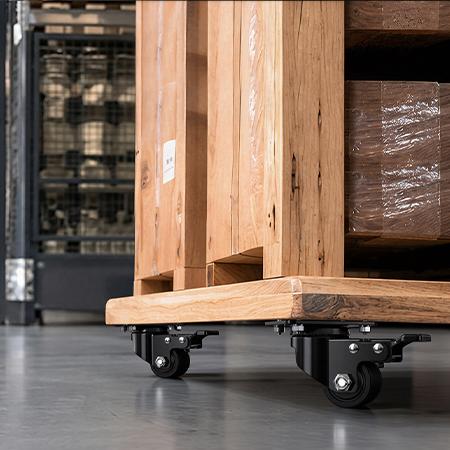
When choosing heavy-duty casters, the brake mechanism is just as important as wheel material, load capacity, and mounting style. A caster may stop rolling but still allow the wheel to swivel. For some carts, that is sufficient. For heavier equipment, a caster that locks both the wheel and swivel may provide better positioning control.
The two most common options are wheel-brake casters and total-lock casters.
What Is a Wheel Brake Caster?
A wheel brake caster uses a brake to stop the wheel from rolling. When engaged, the equipment remains in place more securely than with an unrestricted caster.
However, the swivel raceway may still rotate. This means the wheel can change direction even when the brake is engaged.
Wheel-brake casters are often suitable for:
-
Light- and medium-duty carts
-
Utility tables
-
Display fixtures
-
Equipment that is moved frequently
-
Applications where limited parking control is acceptable
For general-purpose equipment, a wheel brake may offer a practical balance between mobility and stability.
What Is a Total-Lock Caster?
A total-lock caster locks two functions at the same time:
-
The wheel stops rolling.
-
The swivel raceway stops rotating.
This keeps the caster pointed in its selected direction while the equipment is parked. The result is improved directional control and greater resistance to unwanted caster movement.
Total-lock casters are commonly used on:
-
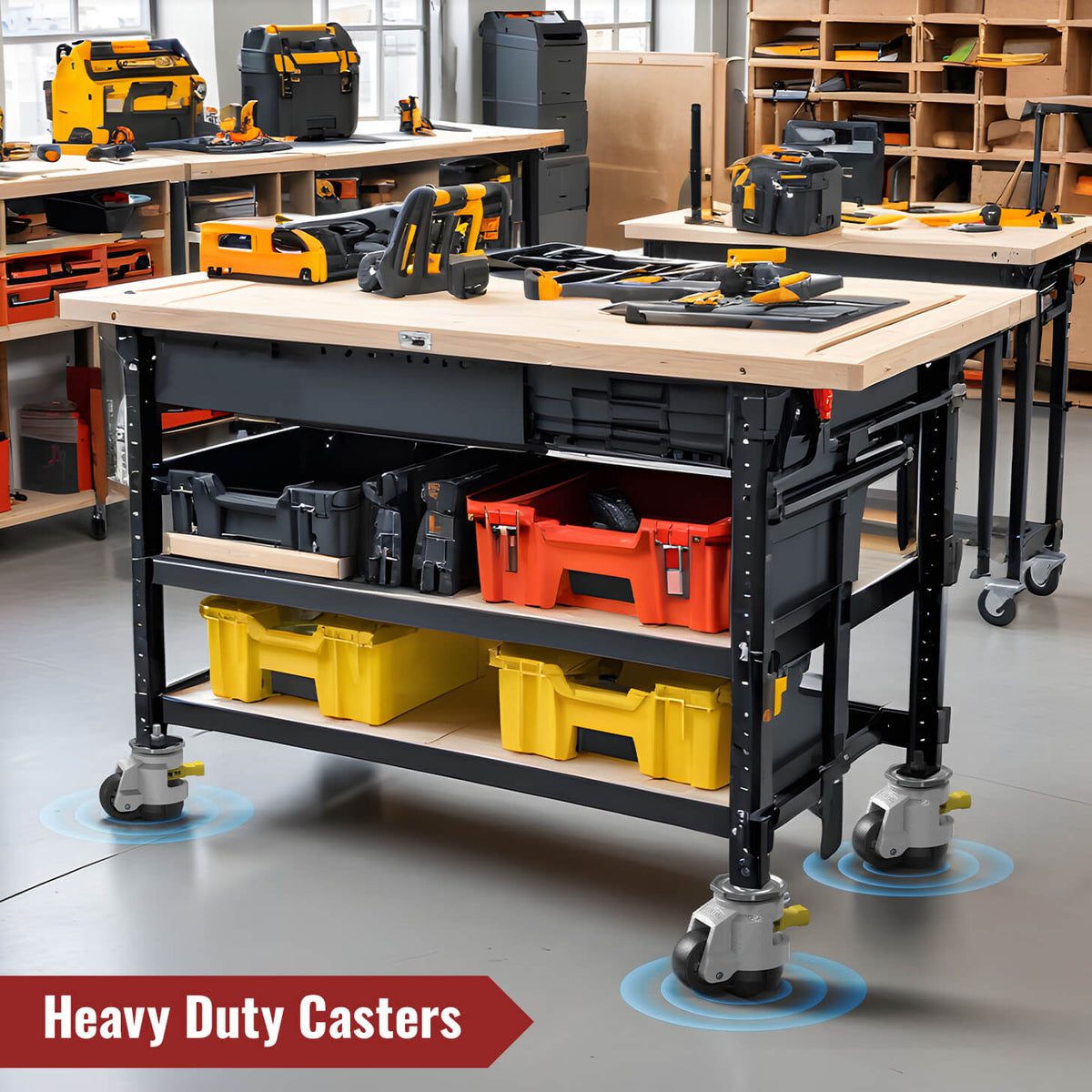
Heavy-duty equipment carts
-
Workbenches
-
Server racks and equipment cabinets
-
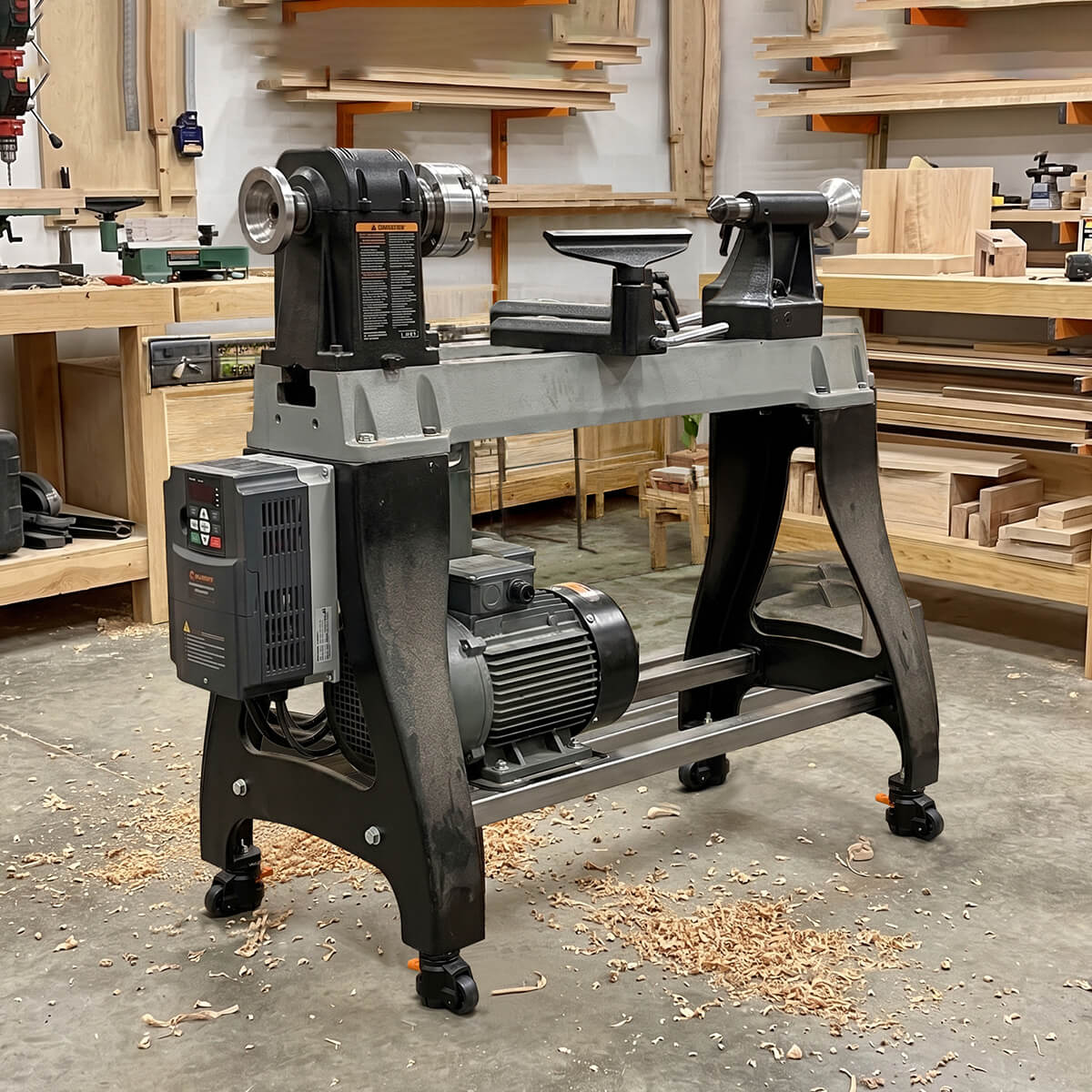
Machine bases
-
Warehouse shelving
-
Welding carts
-
Material-handling equipment
A total-lock mechanism is especially useful when the equipment needs to stay aligned after it has been positioned.
Total Lock vs. Wheel Brake
| Feature | Wheel Brake | Total-Lock Caster |
|---|---|---|
| Stops wheel rotation | Yes | Yes |
| Locks swivel movement | Usually no | Yes |
| Helps maintain caster direction | Limited | Yes |
| Best for general-purpose carts | Yes | Yes |
| Best for heavy equipment positioning | Sometimes | Usually preferred |
| Available with plate mounting | Yes | Yes |
A wheel brake controls rolling. A total lock controls both rolling and swiveling.
When Should You Choose a Total-Lock Caster?
Choose a total-lock caster when the equipment needs more controlled positioning after movement.
For example, a workbench may need to remain aligned with a wall or production station. A server rack may need to stay pointed in one direction while technicians work around it. A machine base may need to remain stable while the equipment is not being moved.
A total-lock caster can also be helpful when:
-
The equipment is tall or difficult to reposition by hand
-
The load is heavy and directional movement matters
-
The casters are installed near corners of a large frame
-
The equipment is moved into a fixed working position
-
You want the wheel and swivel to be controlled by one pedal
The brake should always be engaged on a suitable surface, and the equipment should be loaded and mounted according to the manufacturer’s recommendations.
Why Caster Size and Load Capacity Matter
The brake mechanism is only one part of caster selection. Wheel diameter, mounting height, wheel material, and load capacity must also match the equipment.
For heavy equipment, calculate the total load before choosing a caster set. The load should be distributed across the complete set, and the equipment frame must be strong enough to support the mounting plates.
This 2-inch low-profile total-lock plate caster is available in two set options:
-
4-Pack: up to 2,200 lb combined capacity
-
8-Pack: up to 4,400 lb combined capacity
The stated capacity applies to the complete set, not to one individual caster. Actual performance may vary depending on load distribution, installation quality, floor conditions, and the structure of the equipment.
Why Choose Low-Profile Casters?
Low-profile casters help keep the equipment closer to the floor. This can be useful when you want to limit the increase in overall equipment height.
The 2-inch caster has a load height of approximately 3-5/32 inches. Before ordering, compare the load height with the available clearance under your equipment.
Low-profile casters may be suitable for:
-
Compact machine bases
-
Low-clearance equipment
-
Workbenches
-
Tool carts
-
Server cabinets
-
Equipment cases
A low-profile design does not mean the caster is suitable for every application. Check the wheel diameter, load height, plate size, and mounting pattern before installation.
Nylon Wheels for Smooth Indoor Floors
Nylon wheels are designed for smooth, hard indoor surfaces. They offer low rolling resistance and are commonly used in warehouses, workshops, manufacturing areas, and equipment rooms.
These casters are best suited for surfaces such as:
-
Polished concrete
-
Epoxy flooring
-
Cement floors
-
Smooth tile
Nylon wheels may not be the best choice for rough outdoor terrain, uneven surfaces, soft flooring, or applications where floor protection is the primary concern.
Plate Mounting: Check the Pattern Before Buying
Plate casters attach to equipment through a flat top plate. This provides a broad mounting surface, but the plate and hole pattern must match the equipment.
Before purchasing, check:
-
Available mounting surface
-
Top plate length and width
-
Hole or slot size
-
Hole spacing
-
Bolt clearance
-
Required load height
The top plate on this model measures 3-7/8 inches x 2-11/16 inches. The mounting hole spacing is approximately 2-13/32 inches x 1-15/32 inches. Always compare these measurements with your equipment before ordering.
Total-Lock Casters vs. Leveling or Retractable Casters
A total-lock plate caster is designed to provide mobility and parking control. It does not raise, lower, or level the equipment.
Choose leveling or retractable casters instead when your application requires:
-
Lifting the equipment off the floor
-
Lowering adjustable feet
-
Converting between rolling and stationary support
-
Fine height adjustment
-
Equipment leveling on uneven surfaces
Choosing the correct product type helps prevent installation problems and mismatched expectations.
Which Caster Lock Is Right for You?
Choose a wheel-brake caster if you mainly need to stop the wheel from rolling and the swivel position is not important.
Choose a total-lock caster if you need to control both rolling and swiveling, especially for heavy equipment, workbenches, server racks, machine bases, and industrial carts.
For applications requiring a compact installation height, this 2-inch heavy-duty total-lock plate caster combines:
-
Nylon wheels
-
Total-lock wheel and swivel control
-
Low-profile 3-5/32-inch load height
-
Reinforced top plate
-
Double ball bearings
-
Complete mounting hardware
-
4-pack and 8-pack capacity options
Explore the 2-inch heavy-duty total-lock plate casters and confirm the mounting pattern before purchase.
Need more than an 8-pack? Contact HOLKIE for bulk-order assistance.
Frequently Asked Questions
Does a total-lock caster stop both rolling and swiveling?
Yes. A total-lock mechanism is designed to engage both the wheel lock and the swivel lock.
Are total-lock casters better than wheel-brake casters?
Neither type is universally better. A total lock is generally more appropriate when both wheel movement and swivel movement need to be controlled. A wheel brake may be sufficient for simpler applications.
Are these casters suitable for leveling equipment?
No. These are fixed-height swivel plate casters. They do not provide lifting, lowering, or leveling functions.
How do I know whether the caster will fit?
Measure the available mounting area, top plate dimensions, hole size, hole spacing, and required load height. Compare those measurements with the caster specifications before ordering.
Are these nylon casters suitable for outdoor use?
They are primarily intended for smooth indoor hard floors. Rough outdoor surfaces may reduce rolling performance and service life.




Solid Rubber vs. Pneumatic Gate Wheels: How to Choose a Flat-Free Replacement