
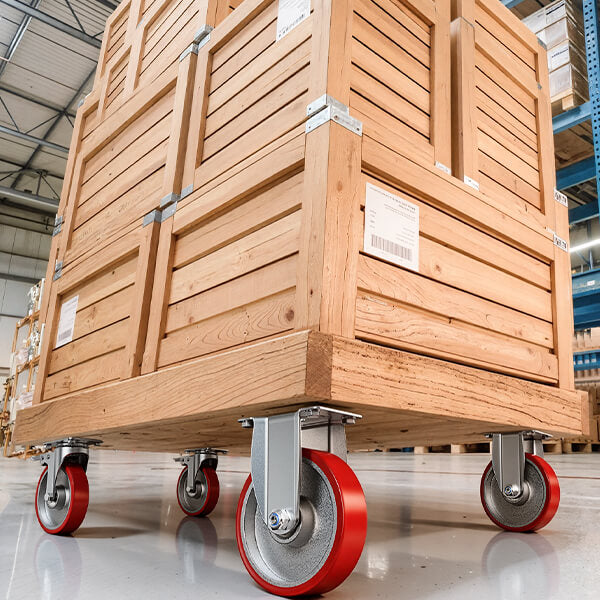
Choosing between 3 inch and 4 inch heavy-duty casters is not only about wheel diameter. The right set must match your equipment's load, mounting dimensions, available clearance, and intended use.
Both sizes can be practical for carts, tool cabinets, storage racks, work tables, and mobile fixtures. Before ordering, compare the capacity and mounting requirements of the complete caster set.
The Caster Configuration Matters
This heavy-duty plate caster set includes:
-
2 swivel casters with foot-operated total locks
-
2 rigid casters without brakes
-
Polyurethane wheel treads
-
Cast iron wheel cores
-
Zinc-plated steel brackets
-
Double sealed ball bearings
-
Mounting hardware and wrenches
The two swivel casters provide steering. Their total-lock pedals secure both wheel rotation and swivel movement. The two rigid casters roll in a fixed direction to help the equipment track predictably.
3 Inch vs. 4 Inch Caster Comparison
| Feature | 3 Inch Set | 4 Inch Set |
|---|---|---|
| Wheel diameter | 3 in | 4 in |
| Tread width | 1.1 in | 1.2 in |
| Set capacity | Up to 1,410 lb | Up to 1,984 lb |
| Top plate | 3.71 x 2.53 in | 3.70 x 2.52 in |
| Overall height | 4.1 in | 4.1 in |
| Swivel caster hole spacing | 2.92 x 1.74 in | 2.93 x 1.75 in |
| Rigid caster hole spacing | 2.91 x 1.73 in | 2.93 x 1.75 in |
Load capacity applies to the full set of four casters with evenly distributed weight. Actual performance also depends on the equipment structure, mounting surface, floor condition, and load placement.
Choose 3 Inch Casters When
The 3 inch caster set may be the better fit when:
-
Your equipment has limited space around the mounting area.
-
Your total load is within the 1,410 lb set capacity.
-
You are replacing a 3 inch plate caster set with compatible mounting dimensions.
-
You need mobility for tool cabinets, shop carts, storage units, or compact work tables.
-
You have measured the swivel and rigid caster mounting patterns separately.
Do not assume that a 3 inch caster is interchangeable with every other 3 inch caster. Plate size, slot size, hole spacing, wheel width, and bracket shape can vary.
Choose 4 Inch Casters When
The 4 inch caster set may be the better fit when:
-
Your equipment needs up to 1,984 lb of total set capacity.
-
You want a wider 1.2 inch polyurethane tread.
-
Your mounting plate and clearance match the 4 inch version.
-
You are building or upgrading a heavier cart, cabinet, rack, workbench, or equipment stand.
-
You need the same mixed configuration of 2 locking swivel casters and 2 rigid casters.
Measure your current top plate and mounting-hole spacing before choosing a replacement.
Why Use Two Swivel Casters and Two Rigid Casters?
A mixed caster configuration helps balance steering control with directional travel.
The swivel casters make it easier to change direction. The rigid casters help reduce wandering when moving equipment in a straight line. When the total-lock brakes are engaged on the swivel casters, they help keep compatible equipment from rolling or pivoting while parked.
This configuration is useful when you want a cart or cabinet to move with control rather than rotate freely on four swivel casters.
Check These Measurements Before Ordering
Before selecting either size, confirm:
-
Your equipment has a flat, strong mounting surface.
-
The top plate fits within the available mounting area.
-
The mounting-slot size and hole spacing match your equipment.
-
The caster has enough clearance below the equipment.
-
The total equipment weight is within the listed set capacity.
-
The load will be reasonably distributed across all four casters.
-
The intended floor is smooth and firm enough for polyurethane casters.
Choose the Set That Fits Your Equipment
The 3 inch option is a dependable choice for compatible equipment up to 1,410 lb per set. The 4 inch option provides a higher 1,984 lb set capacity and a slightly wider tread.
For both sizes, the best choice starts with fitment. Measure the mounting plate, compare the swivel and rigid hole patterns, and choose a capacity that leaves an appropriate margin for your equipment and working conditions.
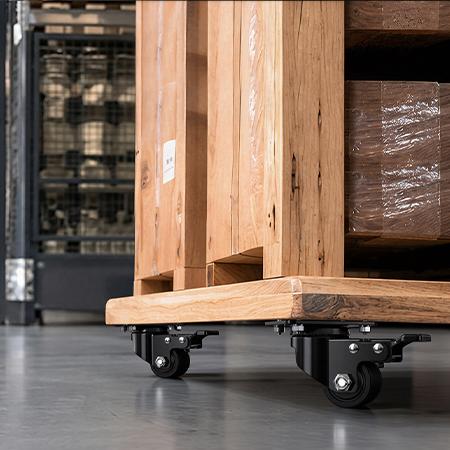
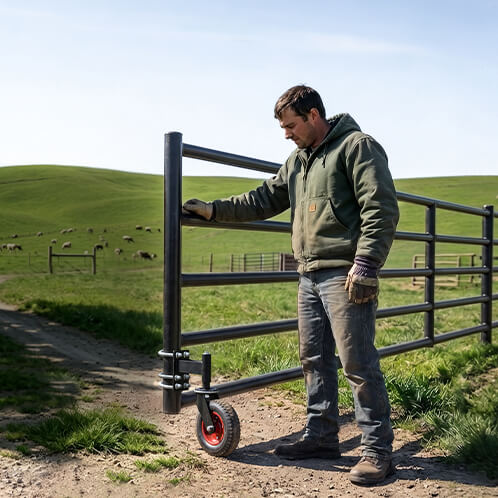
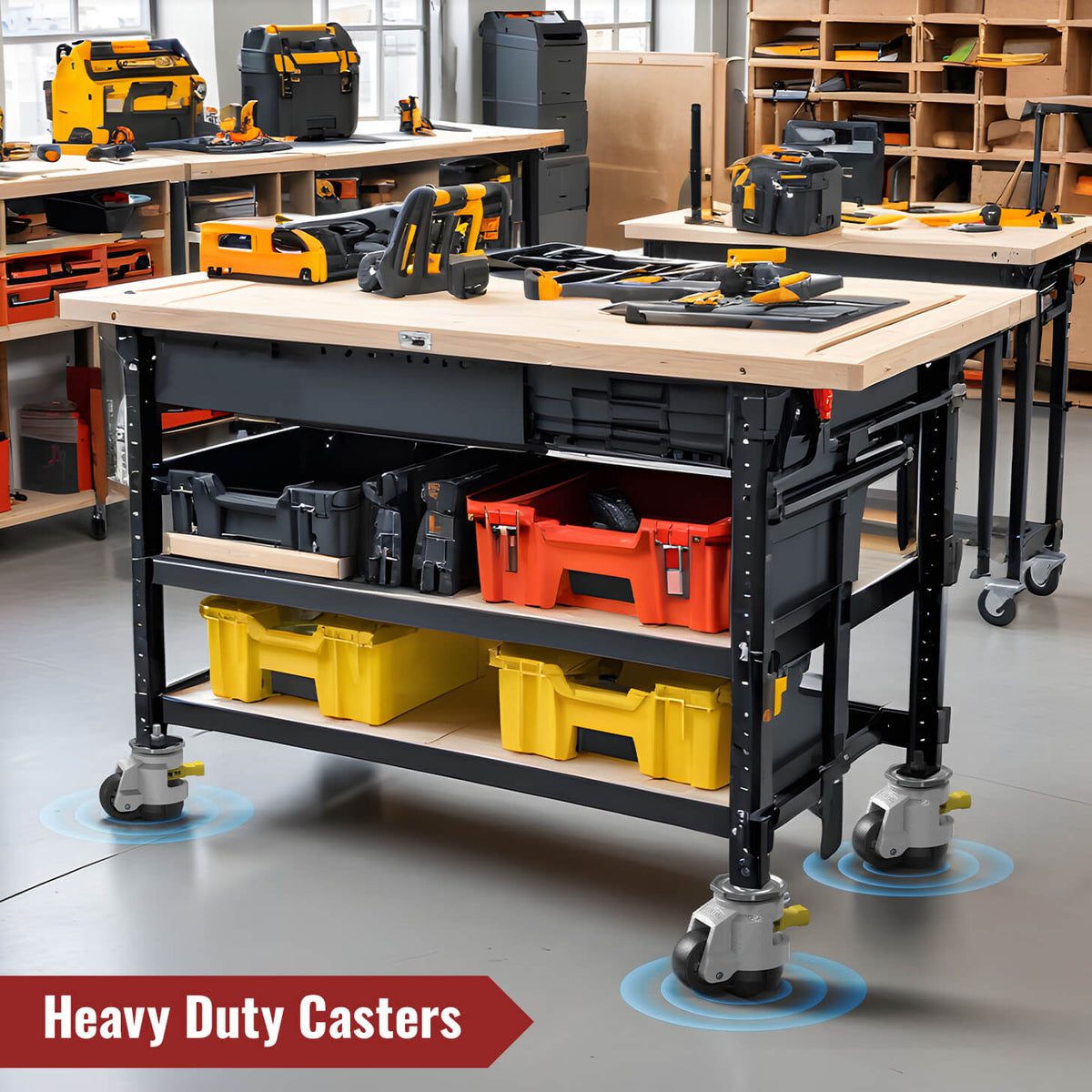



Total Lock vs. Wheel Brake: Which Heavy-Duty Caster Lock Do You Need?