
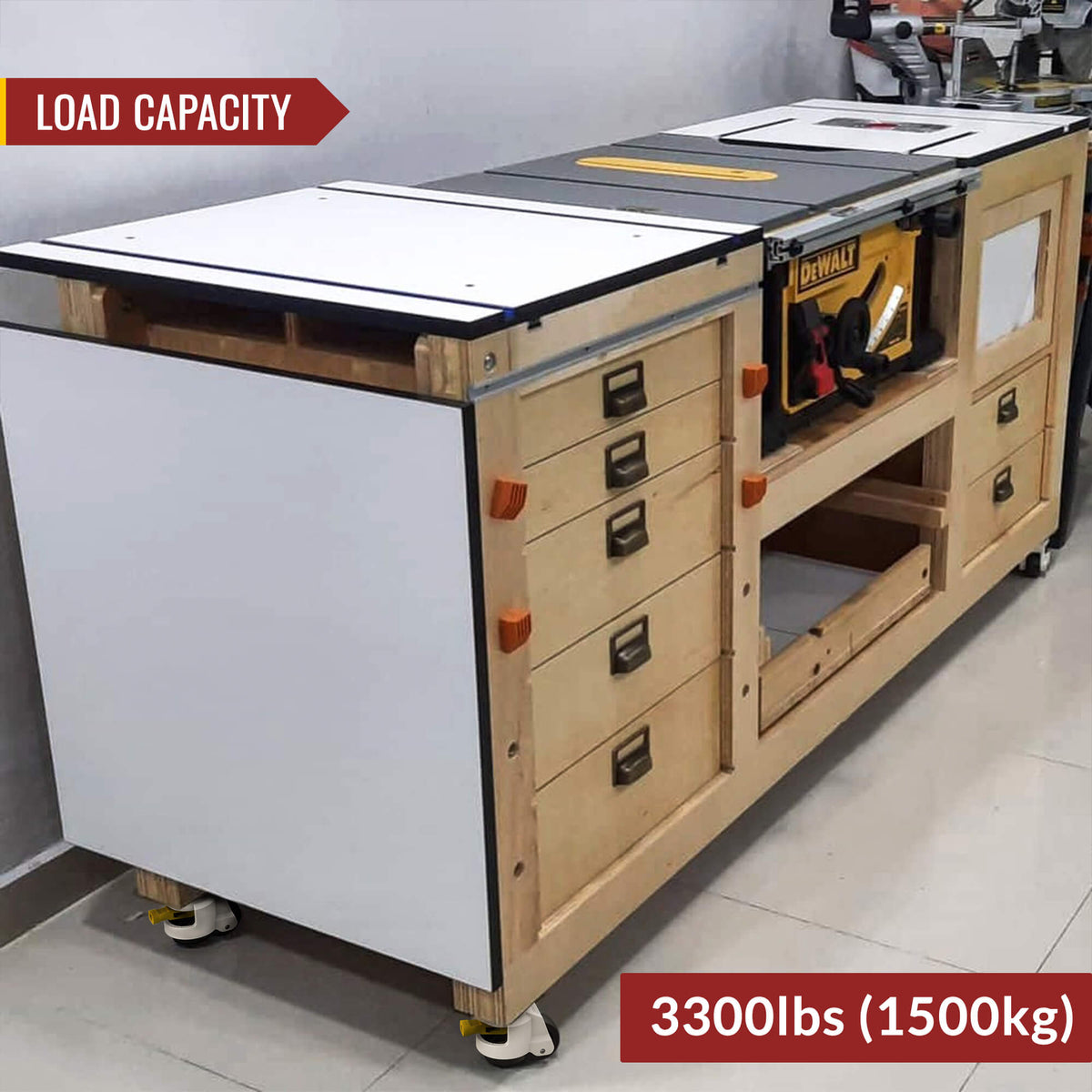
Choosing heavy-duty leveling casters starts with the fully loaded weight of your equipment and the way the product's capacity is rated. A listing may give a rating for one caster or for a complete set. Those figures are not interchangeable.
Before comparing models, add the equipment weight to its maximum working load, then confirm whether the selected caster's rating applies per caster or per set. Also check whether the rating applies while rolling, while supported by the leveling feet, or in both positions.
See the Holkie leveling casters collection for current models and specifications.
Start With the Capacity Rating Basis
Read the product specifications to find out what the load-capacity number covers. A rating might apply to a single caster or to a specified set of casters. Check the unit, the number of casters in the set, and the operating condition described by the manufacturer.
| How the capacity is listed | What to compare it with | What to confirm |
|---|---|---|
| Per caster | The required capacity for each caster in the equipment layout | How the manufacturer expects load to be distributed |
| Per set | The total working weight of the equipment using that set | The number of casters and operating conditions covered by the rating |
Do not divide a set rating by the number of casters and treat it as a per-caster rating unless the manufacturer says that is how the capacity should be interpreted. Likewise, do not multiply a per-caster rating and assume the total is a valid set rating.
Step 1: Calculate the Total Working Weight
Add the equipment's weight to the heaviest load it is expected to carry:
Total working weight = equipment weight + maximum working load
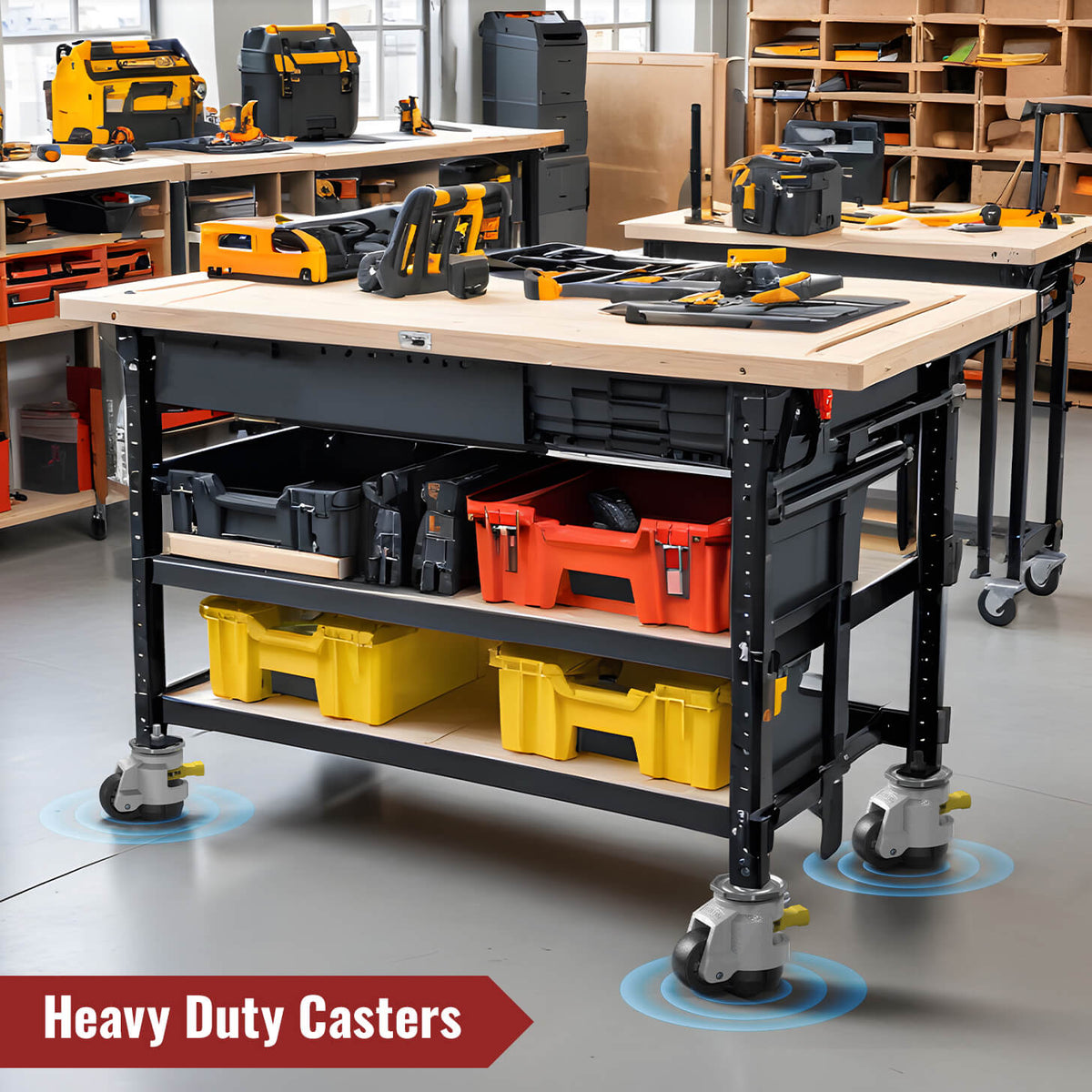
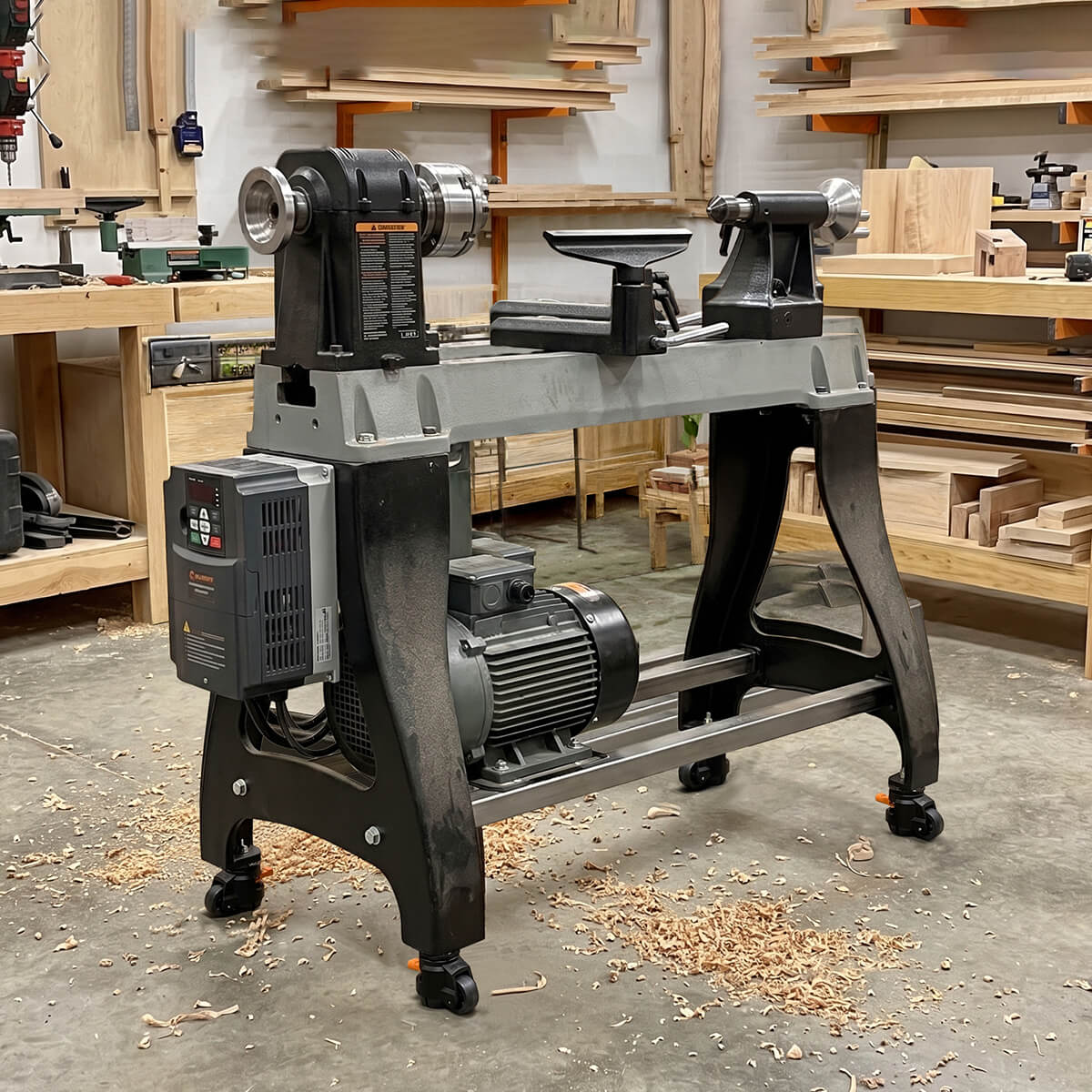
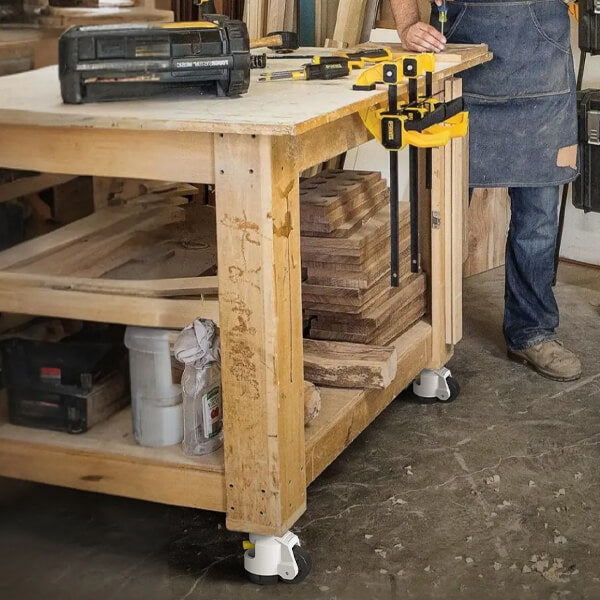
For a workbench, include tools, fixtures, stored materials, and the heaviest normal workpiece. For a machine, include attachments and any material or equipment that will be supported during operation. Use the maximum expected load rather than an average load.
Example
- Workbench weight: 800 lb
- Maximum tools and workpiece: 400 lb
- Total working weight: 1,200 lb
Use this 1,200 lb total when comparing the application with a product rated for a complete set. Check that the product's set rating applies to the number of casters and the working position you plan to use.
Step 2: If the Rating Is Per Caster, Check the Load Distribution Method
When a product is rated per caster, the required capacity depends on how the equipment distributes its load. Four casters do not always carry exactly one-quarter of the load each. Uneven floors, frame flex, and an off-center load can place more weight on some casters than others.
Some caster-selection methods use a three-support calculation for a four-caster mobile unit:
Example planning estimate: 1,200 lb ÷ 3 = 400 lb per caster
This is a common conservative starting point for certain four-caster layouts. It is not a universal rating rule for every leveling caster. Follow the selected model's capacity instructions, especially when the leveling feet are deployed and the equipment is in its working position.
If the manufacturer's capacity basis or load-distribution method is unclear, ask the supplier to confirm it before ordering.
Step 3: Check the Leveling Position
Leveling casters combine movement with an adjustable support function, but designs differ. Check how the selected model is intended to support equipment after positioning. The stated rating may apply to the caster while rolling, to the supported work position, or to a specified use condition.
Follow the model instructions when moving the equipment and deploying the leveling mechanism. Do not assume that all leveling casters transfer the load in the same way or that a higher advertised capacity alone confirms suitability.
Step 4: Review the Application Conditions
The capacity number is only one part of the selection. Review these conditions before choosing a model:
- Load position: A heavy motor, fixture, or workpiece near one corner can place more load on nearby casters.
- Floor condition: Slopes, joints, cracks, and uneven surfaces can affect load distribution and movement.
- Movement: Frequent repositioning, thresholds, and impacts may require a different model or additional engineering review.
- Frame strength: The equipment frame and caster mounting points must support the load.
- Working height and clearance: Confirm the installed height and ensure the leveling mechanism can be operated as intended.
For machinery with vibration, concentrated loads, or demanding floor conditions, request an application review instead of relying on a basic calculation alone.
Check Mounting Compatibility Before Ordering
A caster can have an adequate load rating and still be unsuitable if its mounting does not match the equipment. For plate-mount models, compare the plate dimensions and hole spacing with the frame. For threaded-stem models, confirm the thread diameter, pitch, engagement, and available clearance.
Use the guide to compare plate-mount and threaded-stem leveling casters. For broader machine-selection guidance, see How to Select Machine Leveling Casters for Industrial Equipment.
Common Load-Capacity Mistakes
Calculating from the empty equipment weight
Include the maximum tools, fixtures, materials, or workpieces the equipment will support.
Assuming every rating is per caster
Check whether the specification applies to one caster or a complete set before doing any calculations.
Assuming all casters share the load equally
Load position, floor conditions, and frame stiffness can affect how much weight each caster carries.
Ignoring the working position
Confirm the load rating for the state in which the equipment will be used. Rolling and stabilized positions may have different requirements.
Frequently Asked Questions
How do I calculate the working weight for leveling casters?
Add the equipment's weight to the maximum load it will support. Include tools, fixtures, attachments, and the heaviest expected workpiece or material.
Should I divide the total weight by four?
Not automatically. The calculation depends on whether the rating is per caster or per set and on the load-distribution method specified for the application. Follow the manufacturer's guidance.
What does “capacity per set” mean?
It means the rating applies to the specified group of casters used together. Confirm the number of casters and the conditions covered by the set rating before comparing it with your equipment's total working weight.
Can leveling casters be used on uneven floors?
Some models can compensate for limited floor variation within their specified adjustment range. Check the model's range and instructions. Leveling casters are not a substitute for correcting a seriously damaged or sloped floor.
Choose a Model for the Full Application
Before ordering, confirm the total working weight, capacity basis, mounting style, installed height, floor condition, and required leveling range. Then compare those requirements with the current specifications in the leveling caster collection.
For multiple units or a machine with an unusual load layout, prepare the equipment weight, maximum load, caster count, mounting details, floor conditions, and operating requirements for a product review.
For setup instructions after installation, see How to Level a Workbench With Leveling Casters.


What Are Stainless Steel Casters? Materials, Benefits, and Buying Tips