
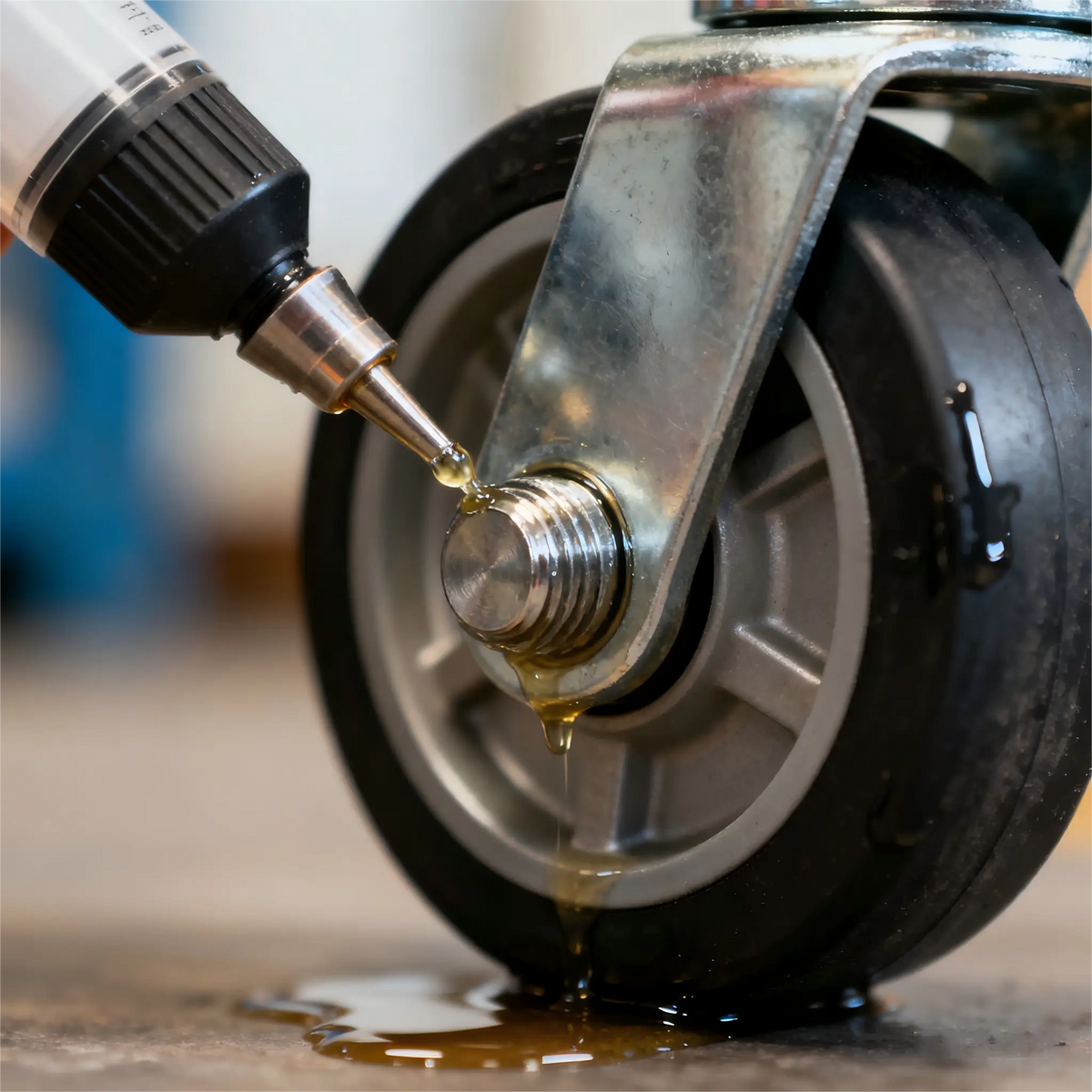
The Unsung Heroes of Mobility Need TLC
Casters are often the most overworked components in any facility, bearing the full weight of heavy equipment while constantly battling friction, debris, and challenging floor surfaces. Yet, they are frequently neglected. A lack of proactive maintenance leads to increased push/pull effort, accelerated wear on the host equipment's components, and eventually, costly downtime or replacement.
This is your definitive guide to Caster Maintenance. We will break down the essential steps for inspection, lubrication, cleaning, and troubleshooting, ensuring your casters operate at peak efficiency to maximize the longevity and return on investment (ROI) of your valuable equipment.
Foundation of Durability: The Routine Inspection Protocol
Regular visual and functional checks are the simplest, most cost-effective way to prevent catastrophic caster failure.
Daily Quick Checks (Operator Level)
Wheel Integrity: Check for any debris (strings, wires, metal shavings) tightly wrapped around the axle or hub. Inspect the wheel tread for gouges, flat spots, or chunking (pieces breaking off).
Swivel Functionality: The caster should rotate smoothly through a full 360-degree arc. If the swivel is stiff, noisy, or drags, it requires immediate attention (likely lubrication or cleaning).
Brake Status: Test all locking mechanisms (total lock, directional lock) to ensure they engage fully and hold the equipment securely without sliding.
Weekly Deep Dive (Maintenance Level)
Fastener Tightness: Inspect all mounting bolts and axle nuts. Looseness is the primary cause of premature failure in caster rigs. Use a torque wrench to ensure all fasteners are tightened to the manufacturer's specified force.
Bearing Noise/Play: Lift the equipment slightly and spin the wheel manually. Listen for grinding or clicking noises, which indicate damaged or dry bearings. Check for excessive "side-to-side play," which suggests worn-out bearings or worn axles.
Frame/Fork Inspection: Look closely at the steel fork for signs of bending, stress cracks (especially near welds), or corrosion. A bent fork indicates the caster has been severely impacted or overloaded and must be replaced immediately.
The Lubrication Imperative: Protecting Precision Components
Proper lubrication minimizes friction, prevents bearing seizing, and drastically reduces the force required to move heavy loads.
Selecting the Right Lubricant
The choice of grease must match the environment, not just the caster:
Standard Industrial: Typically, a Lithium-Based Grease (NLGI Grade 2) offers good all-around performance and water resistance.
Wet/Washdown Areas: Waterproof or Calcium Sulfonate Complex Grease is mandatory to prevent rust and wash-out.
High Temperature: For ovens or extreme heat zones, use a Synthetic or Silicone-Based Grease to prevent breakdown and caking.
NEVER Use: Penetrating oils (like WD-40). They are too thin, designed to displace existing lubricant, and will cause long-term harm by leaving the bearings unprotected.
Strategic Lubrication Points and Frequency
Swivel Raceways (Top): This area is crucial for easy steering. Grease must be periodically applied through the zerk fitting until clean grease appears at the bottom of the swivel race.
Wheel Bearings: Apply grease until it visibly emerges from both sides of the wheel hub. This confirms the old, contaminated grease has been purged.
Maintenance Note: Frequency depends on use: Monthly for severe conditions (wet, heavy debris) or Quarterly for normal industrial use.
The Debris Challenge: Cleaning and De-Stringing
Axle wraps and debris are the number one cause of caster seizing, rapidly increasing push force and damaging seals.
Immediate De-Stringing: Any string, wire, or banding material wrapped around the axle must be removed immediately. Use caution and a pair of blunt scissors or a utility knife to cut the material away without scratching the axle or seals.
Full Washdown: Use warm water and mild detergent to clean the entire caster. Harsh solvents should be avoided as they can degrade rubber and polyurethane wheel materials.
The Dry-Out Rule: Always ensure the caster is completely dry before relubricating. Water trapped inside the bearing housing will compromise the grease and accelerate corrosion.
Troubleshooting: Repair, Replace, or Retire?
Knowing when a caster is salvageable versus when it is a safety liability is critical to protecting your equipment.
Severe Flat Spots/Chunking
Overload, prolonged static use on soft material, or chemical exposure.
REPLACE. Affects load capacity, steering, and floor protection.
Wobbling/Excessive Play
Worn wheel bearings or loose axle nuts/bolts.
REPAIR: Check/tighten axle nut. REPLACE entire wheel if bearing noise persists.
Bent/Deformed Fork
Severe impact (e.g., forklift) or extreme shock loading.
RETIRE/REPLACE the entire caster. Structural integrity is compromised.
Caster Drags/Seizes
Lack of lubrication, debris in swivel race, or rusted bearings.
REPAIR: Thoroughly clean, de-string, and relubricate. If performance doesn't restore, REPLACE.
Swivel Lock Fails to Hold
Worn brake shoe, broken foot pedal linkage.
REPLACE the brake mechanism or entire caster unit. Safety hazard.
Maintenance is the Ultimate ROI Protector
High-quality casters are built for endurance, but their longevity is ultimately secured by your maintenance commitment. By implementing a dedicated inspection, lubrication, and cleaning schedule, you drastically reduce unexpected failures, safeguard your expensive equipment from undue stress, and ensure your workforce operates with maximum ergonomic efficiency. Proactive maintenance is not an expense—it is the highest yielding investment in your facility's operational uptime.




Maximizing ROI: Lifecycle Cost, Maintenance, and Replacement Strategy for Heavy Equipment Casters
How Stem Casters Work: The Engineering Principles Behind Mobility
1 comment
Thank you very much for the time and effort put into this article and sharing. Best wishes.